Transportation

  • Key idea: There are different forms of transportation – e.g. Producing a tally of the forms of transport used by children and staff, identifying more sustainable alternatives (UC6.5)
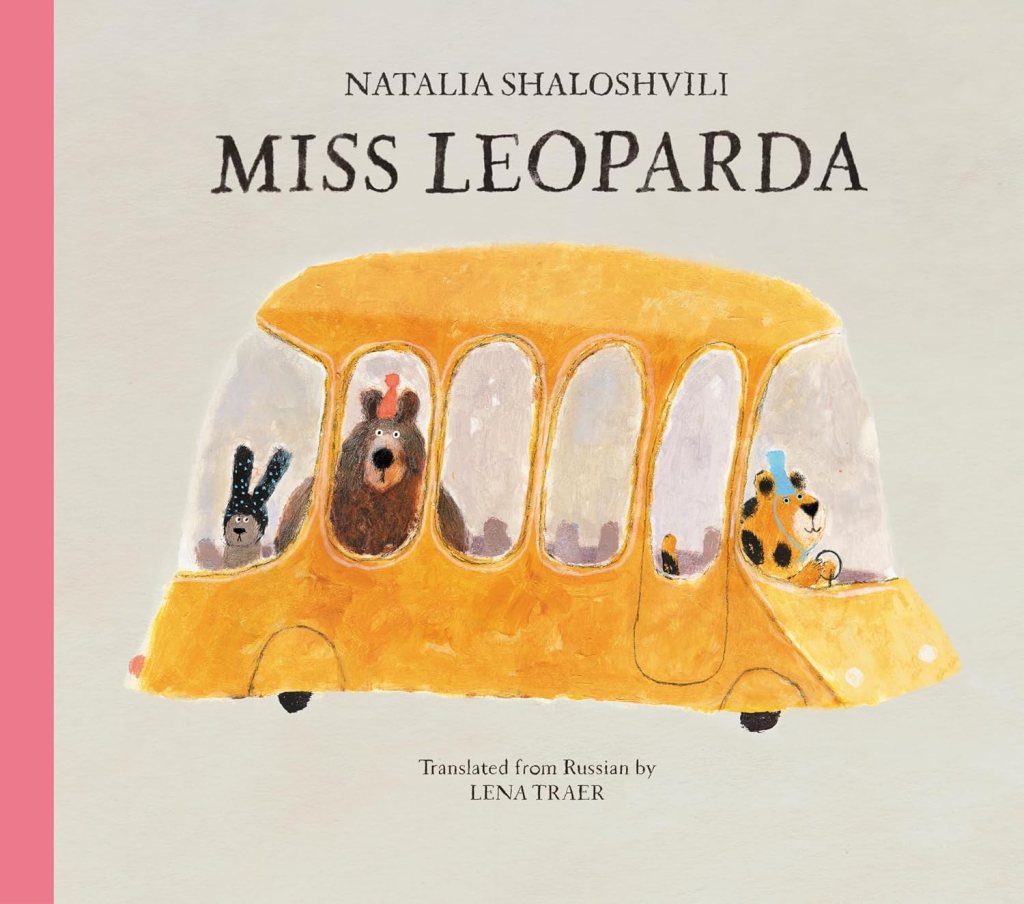
Title:  Miss Leoparda
Author: Natalia Shaloshvili
Translator: Lena Traer
Publisher:  ‎Enchanted Lion Books
Publication Date:  2024
ISBN:‎ 978-1592704125

“An ecologically minded book about a bus-loving, tree-loving, leopard”.

Emergent learning:

It might be assumed that sustainable transportation is too difficult a concept for young children to understand. But they can learn about different forms of transportation, and they can learn about sharing, and about waste, so from an emergent curriculum perspective, we provide children with the knowledge and experiences that they will be able to pull together later in their minds, to make the concept meaningful.

We can observe the progression young children make in their learning and development when we look at the increasingly sophisticated activities that they engage in during their free play.  Piaget called these activities ‘sensory motor schemes’, and there have been many books written about how adults can encourage and develop them further.  

Transportation has been identified as a particularly common scheme that children discover and find fascinating in their play. We provide more explore the idea of schemes further on our online page.

Activity recommendation:

One of the earliest Schemes that you will see children aged 2 to 4 spontaneously playing is “Containing” they often spend extended periods of time putting things into containers and then taking (dropping or pouring) them out again. If you give them the opportunity they will put themselves into containers too.  It’s a fascinating new accomplishment for them.  Another very early scheme involves following ‘Trajectories’ – This may involve throwing or dropping things, rolling things along the floor or drawing/painting lines.  When these two schemes come together in a child’s pre-verbal conception of ‘Transporting’, it involves them putting things into a container and transporting it across a trajectory.  They may be using a shopping bag, a baby stroller, a wheelbarrow or a toy truck, but once discovered, they find this combined scheme fascinating, and educators who observe the scheme can support the learning by giving them ever more varied resources to transport and to transport things in.  Most young children can be observed taking this strong interest in transporting at some point in their free play between the ages of three and five, and this provides us with an especially rich opportunity to talk about sustainable and efficient transport alternatives and about sharing public transport.

A child’s ‘Rotation’ scheme, often evident in their fascination with wheels provides another  way into the transportation topic.

Other book recommendations:
Celebrating Sustainable Progress

  • Key idea: Human actions have long-lasting positive as well as negative impacts – e.g. Celebrating past actions such as when all the countries came together and agreed to tackle climate change, and local actions such as the day solar panels were installed on the public library (UC4.3).

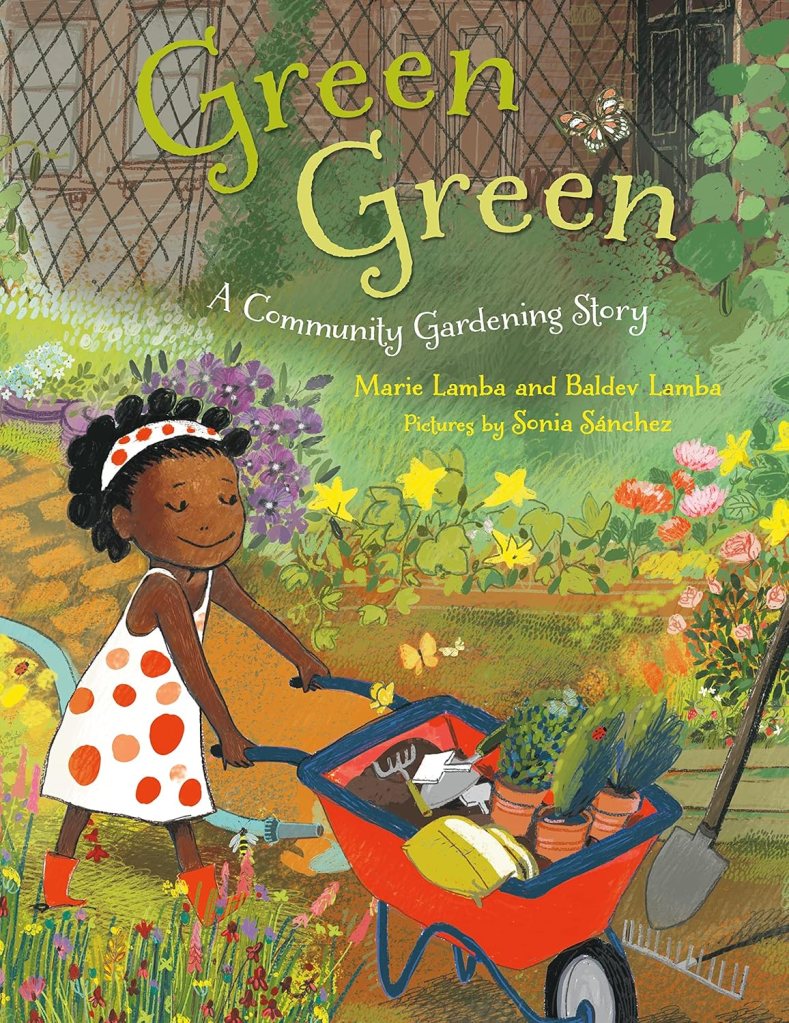
Title:  Green Green: A Community Gardening Story
Author: Marie & Baldev Lamba
Illustrator: Sonia Sanchez
Publisher:  Macmillan Pub.
Publication Date: 2022
ISBN: ‎ 978-1250858535

Children inspire the community to join together and build a garden for everyone to share in the middle of the city.

Emergent learning:

Education for sustainable citizenship is all about supporting your child in seeing themselves as a responsible member of the community, its about supporting them in adopting a positive self identity as a citizen. It is all to easy to focus on the limitations and mistakes of local government and to take achievements for granted. Having a voice and a vote is itself worthy of celebration, and it is important to remember that even the smallest sustainable developments today may provide the foundations for greater progress in the future.

If we are to encourage our children to become sustainable citizens them we must show them the pride that we take in the progress that is being made (however modest it may currently be) in all of our communities. So when you are out and about with your child, point out and celebrate your neighbours and community use of renewable energies, conservation and environmental protection, the evidence of recycling, most importantly the evidence that people CARE.

Activity recommendation:

Every year the United Nations create focused days of action and celebration for a wider range of themes associated with Climate Change, Biodiversity, and Sustainable Development. You can plan your own community activity in schools, preschools or at home. Most of the UN dedicated pages provide a means by which these activities can be shared and celebrated around the world. In September on the 20th there is “World Clean Up day”. 16th October is “World Food Day”, and 26th November “World Sustainable Transport Day”.  You will find a page providing the full list of UN on our web page. https://www.un.org/en/observances/list-days-weeks
 

Other Book recommendations:

Community Action

  • Key idea: Taking climate action is urgent – e.g. Invite community leaders into the preschool to explain their climate actions. Create real or pretend sustainable bazaars, action plans, silent marches, etc. (UC3.5)

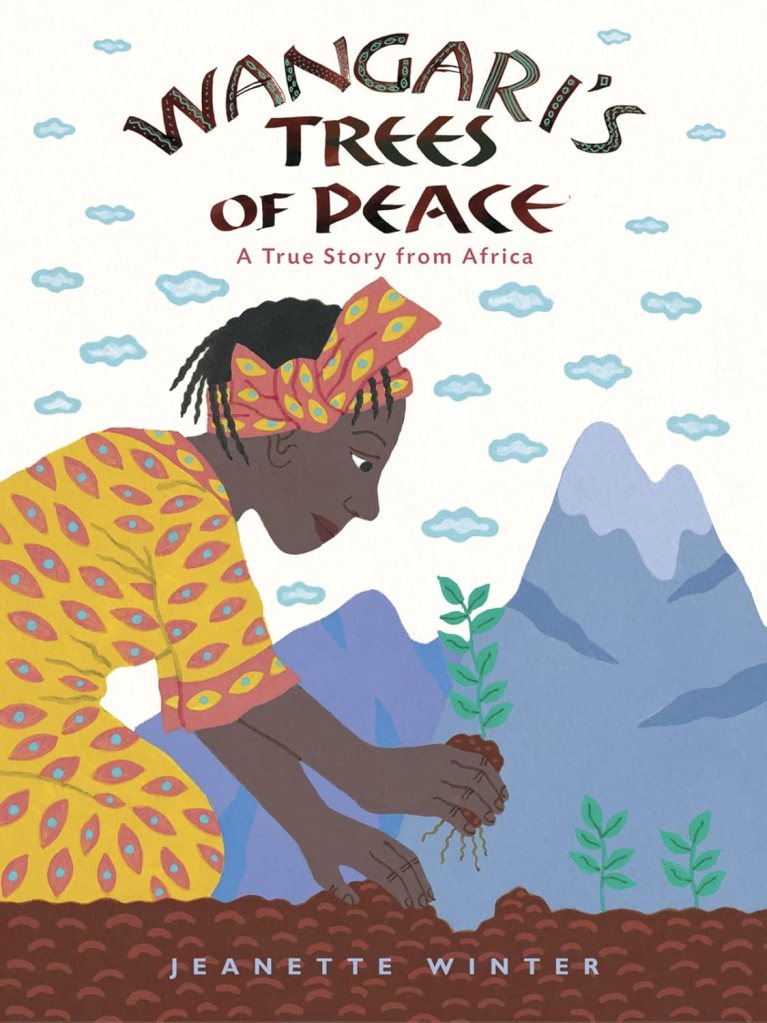
Title:  Wangari’s Trees of Peace
Author: Jeanette Winter
Illustrator: Jeanette Winter
Publisher:  ‎ Harcourt
Publication Date: 2009
ISBN: ‎ 978-0152065454

Wangari showed how a single individual doing ‘the best they can’, can inspire whole communities to take action. The life of Wangari Maathai provides an example and role model for us all. The book reminds us that even small actions can lead to big changes.

Emergent learning:

This book tells the story of an heroic Kenyan woman; Wangari Maathai, who loved nature ever since she was a child. When she grew up, she planted trees that not only changed her country but also set an example for the world. She grew up to become a University Professor, and to win the highest global honour of the Nobel Peace Prize.  Wangari’s story provides children with a wonderful role model, and contradicts any prejudiced assumptions that might otherwise be held about the capabilities of people from African, and of Women.  There is also a wonderful YouTube video well worth sharing with your children.  In the video Wangari tells the story of a hummingbird who, regardless of the challenge, “Always Tries to Do the Best She Can”.  If we all aspire to be as strong as that little Hummingbird then together we can deal with any emergency:

Activity recommendation:

Inviting local members of voluntary organisation or the local council into your child’s nursery to speak to the children may seem daunting but don’t forget most of them will have their own children and even if they don’t, a few words encouragement and advice on how to address young children will usually suffice. Climate action is urgent and we need to take action as individuals and as communities.

See also:
https://www.facebook.com/ProfWangariMaathai

Other Book recommendations: