Needs and Wants

Key idea: Resources are essential and at the same time scarce – e.g. Identifying the difference between needs and wants and the importance of sharing (UC5.1).
Key idea: Material possessions do not bring a lifetime of happiness – e.g.  Making lists of needs and wants, learning about over-consumption.  Playing with upcycled, and recycled toys and materials (UC6.3).
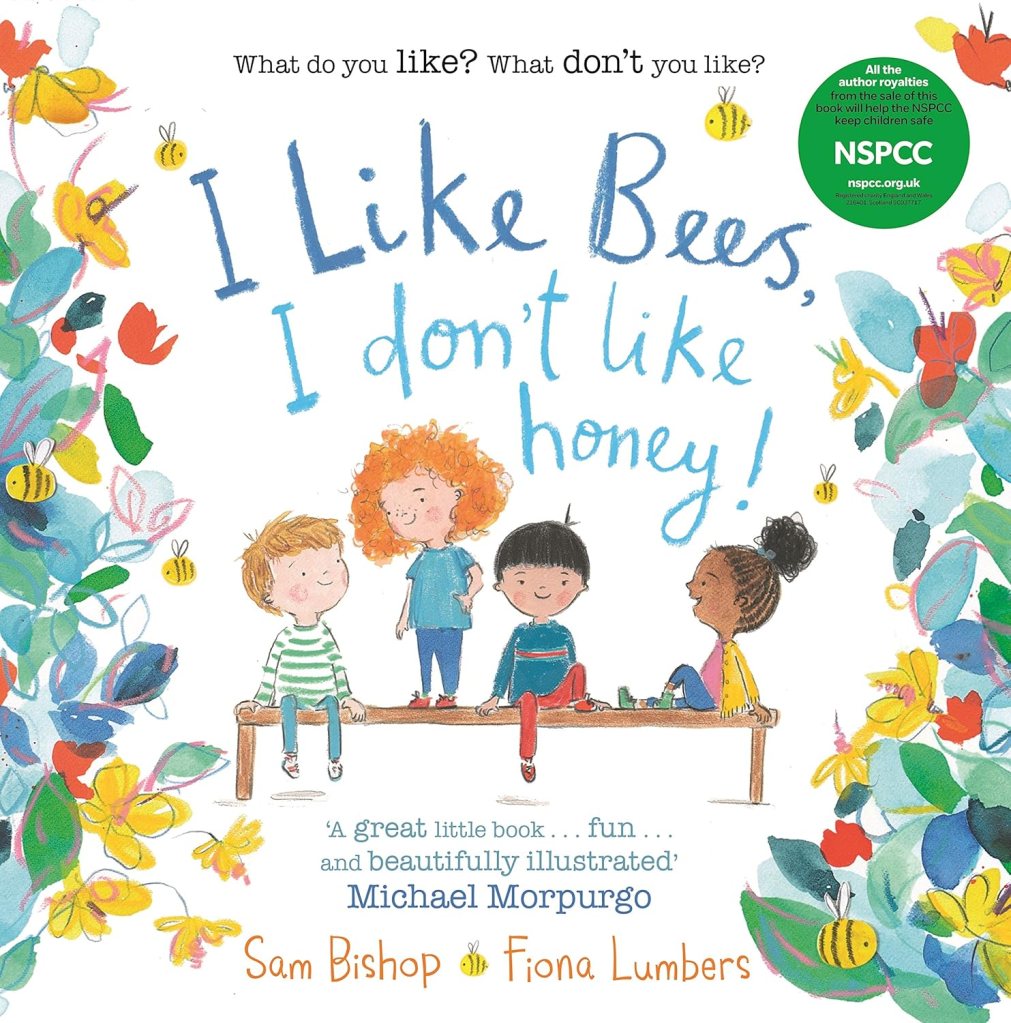
Title:  I like Bees, I don’t like Honey!
Author: Sam Bishop
Illustrator: Fiona Lumbers
Publisher:  ‎Faber & Faber
Publication Date:  2017
ISBN: ‎ 978-0571334193

Encourages children to gain confidence in expressing their feelings, talking about individuality and respect for differences.

 

Emergent learning:

It is crucially important for us to support our children in differentiating between their Needs, and their Wants and Desires

Nature demands that all living creatures economise. People often think of the word ECONOMY as a noun, the news reports are constantly worrying us about the state of the economy and our national wealth.  But ECONOMY is much more importantly a verb – it is something we have to DO – nature demands that all living creatures must economise.  Whether we are human, fish, animal or plant, if we consume all our nourishment, if we destroy our environment – we will perish.  Humanity has infinite wants and desires, but we have finite resources, there are limitations to food, clean air, water, and energy.

Activity recommendation:

Around the World, parents and early childhood educators often talk about the 6 – 9  R’s of sustainable economy: Reduce (use less), Refuse (if you have had enough), Repair (rather than Replace with new), Reuse, Repurpose and Recycle . Sometimes another R – to Rethink (outside the box) is included and Rot may also be included in recognition that composing is so important, and land fill waste disposal so damaging.  These R’s of sustainability provide us with a checklist of crucially important activities that we can draw our children’s attention to, and engage with them in carrying out.

In extension to this we can usefully take the opportunity, when appropriate, to critically differentiate between what is often seen as the self-evident relationship between Technology and Progress:

Which is …the best Technology?

An aircraft that knocked 200 minutes off the time it took to transport 100 people from London to New York (Cost: £20 Million+)?
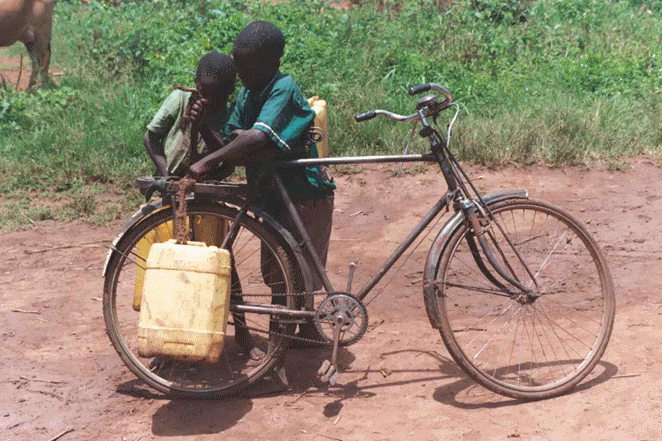
…Or a bicycle that knocked 200 minutes off the time it took to transport a day’s supply of clean water to a village (Cost: £40)?

Ref. Siraj-Blatchford, J (2008) The implications of early understandings of inequality, science and technology for the development of sustainable societies Samuelsson, I and Kaga, Y (Eds), The contribution of early childhood education to a sustainable society. Paris: UNESCO

Book recommendation:
Celebrating Sustainable Progress

  • Key idea: Human actions have long-lasting positive as well as negative impacts – e.g. Celebrating past actions such as when all the countries came together and agreed to tackle climate change, and local actions such as the day solar panels were installed on the public library (UC4.3).

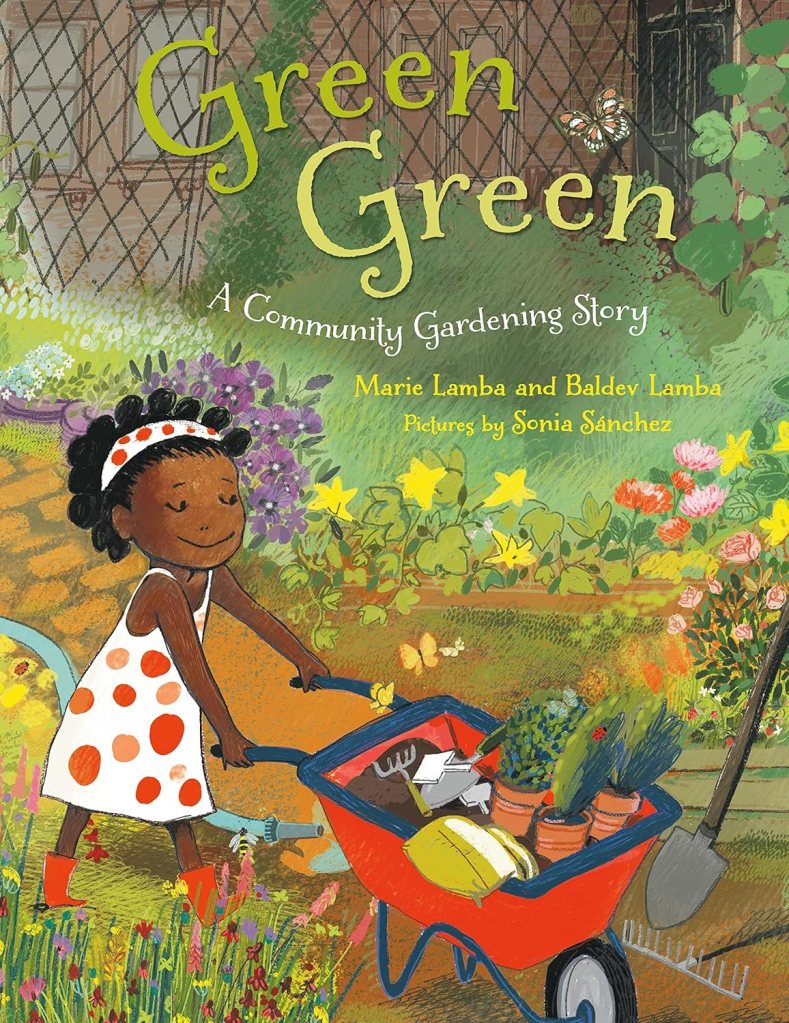
Title:  Green Green: A Community Gardening Story
Author: Marie & Baldev Lamba
Illustrator: Sonia Sanchez
Publisher:  Macmillan Pub.
Publication Date: 2022
ISBN: ‎ 978-1250858535

Children inspire the community to join together and build a garden for everyone to share in the middle of the city.

Emergent learning:

Education for sustainable citizenship is all about supporting your child in seeing themselves as a responsible member of the community, its about supporting them in adopting a positive self identity as a citizen. It is all to easy to focus on the limitations and mistakes of local government and to take achievements for granted. Having a voice and a vote is itself worthy of celebration, and it is important to remember that even the smallest sustainable developments today may provide the foundations for greater progress in the future.

If we are to encourage our children to become sustainable citizens them we must show them the pride that we take in the progress that is being made (however modest it may currently be) in all of our communities. So when you are out and about with your child, point out and celebrate your neighbours and community use of renewable energies, conservation and environmental protection, the evidence of recycling, most importantly the evidence that people CARE.

Activity recommendation:

Every year the United Nations create focused days of action and celebration for a wider range of themes associated with Climate Change, Biodiversity, and Sustainable Development. You can plan your own community activity in schools, preschools or at home. Most of the UN dedicated pages provide a means by which these activities can be shared and celebrated around the world. In September on the 20th there is “World Clean Up day”. 16th October is “World Food Day”, and 26th November “World Sustainable Transport Day”.  You will find a page providing the full list of UN on our web page. https://www.un.org/en/observances/list-days-weeks
 

Other Book recommendations:

Helping Each Other

  • Key idea: Climate effects different groups in different ways – e.g. encouraging support and empathy for different groups such as the elderly, those in more vulnerable environments locally and abroad.
  • Key idea: Who we are, and the circumstances that we live in, can create more negative experiences – e.g. encouraging support and empathy for groups and individuals treated unfairly.

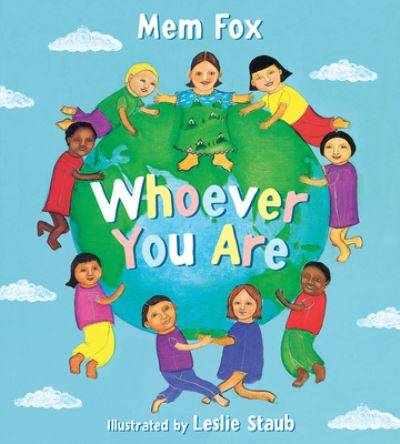
Title:  Whoever You Are
Author: Mem Fox
Illustrator: Leslie Staub
Publisher:  ‎:Houghton Mifflin
Publication Date: 2017
ISBN: ‎ 978-1328895813

“Although children around the world may look different, speak different languages, and live in different places, their hearts are the same. They all laugh, cry, and feel love just like us”.

Emergent learning:

In the context of education for sustainability the first key idea here is that Climate effects different groups in different ways. Who we are, and the circumstances that we live in, can create especially  negative experiences. Human interdependence is an ecological fact of nature, we all depend upon each other, we depend on our family, neighbours, and climate change has shown us now better than ever before how we all depend on everyone else around the world.  Yet competitive national, cultural and ethnic divisions often get in the way of us co-operating and collaborating properly to achieve peace and prosperity for everyone. 

But scientific evidence has repeatedly shown that there is more diversity within human populations and groups than there is between these groups.  Humanity isn’t divided into distinct biological ‘races’, and even gender might be considered more of a continuous, rather than a categorical variable. The physical differences between us provide complementary talents and capabilities.  

The latest research demonstrates the rich neurodiversity that we all share.  We may all be unique individuals and different, but in other respects we are all the same and we are equal.  It is social and cultural prejudices and fear that create barriers to our natural instincts to provide cooperation and mutual support, and for the sake of Peace and Sustainability education these false narratives must be countered from an early age.

Activity recommendation:

Being able to care for others and offer comfort, empathy is an important ability that children can begin to develop in their early years. Some excellent guidance is available to educators and parents:
https://birthto5matters.org.uk/inclusive-practice-and-equalities/
https://www.naeyc.org/resources/pubs/yc/nov2019/understanding-anti-bias

See also:
Siraj-Blatchford, J. (2018) Peace Education and Sustainability, Montessori International, Spring
Siraj-Blatchford, J (2008) The implications of early understandings of inequality, science and technology for the development of sustainable societies in Samuelsson, I and Kaga, Y (Eds), The Contribution of Early Childhood Education to a Sustainable Society. Paris: UNESCO

Other Book Recommendations:

Information and Disinformation

  • Key idea: We learn from many different information sources – e.g. Support the child in their critical awareness of the adult world: Consider teaching them, for example, if they are ever lost, that they should ask another parent with a child for help, and that they should give them their full name.

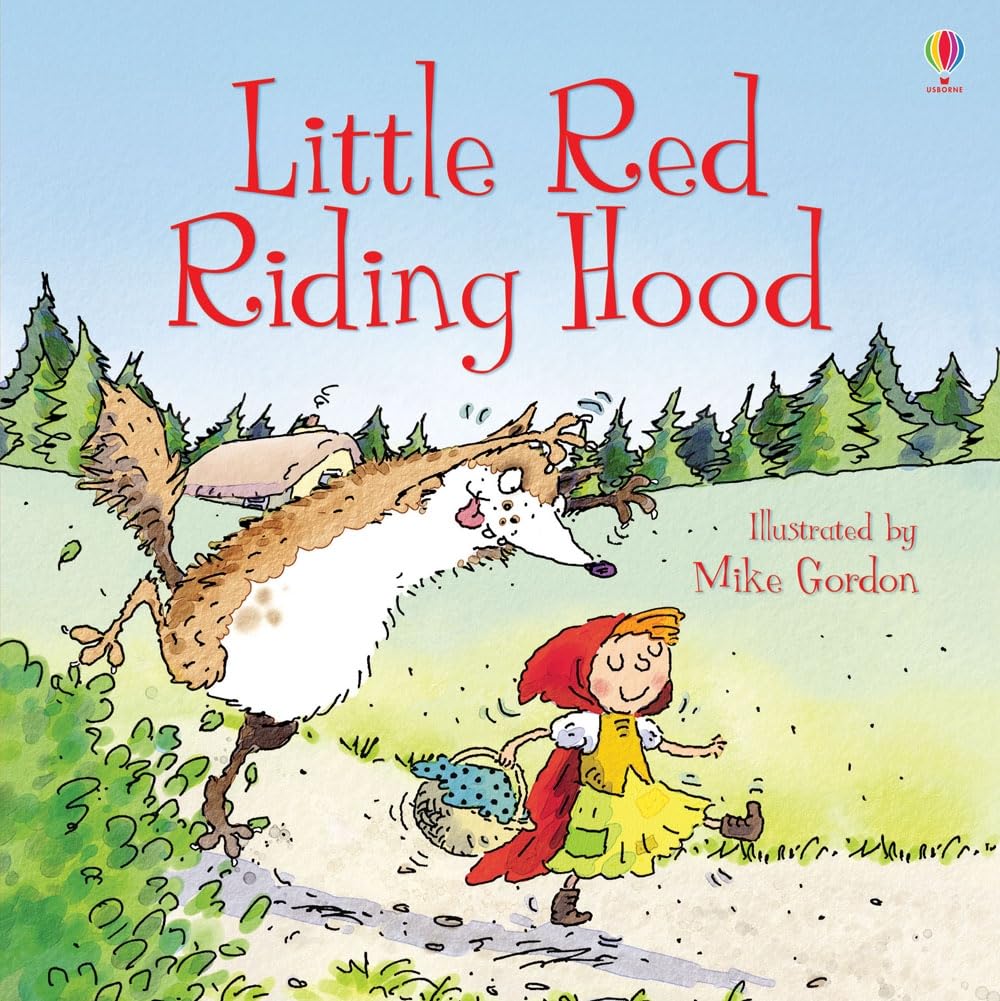
Title:  Little Red Riding Hood
Author: Susanna Davidson
Illustrator: Mike Gordon
Publisher:  ‎ Usborne Picture Books
Publication Date: 2012
ISBN: ‎ 978-1409551690

Children enjoy finding out how Little Red Riding Hood outwitted the Wolf, in this quirky retelling of the classic fairy tale.

Emergent learning:

Children are never too young to begin learning about information and disinformation, they are never too young to be critical thinkers. In fact this is considered a priority for most parents when they think of the dangers of their child blindly trusting other adults. In the UK we have ‘Stranger Danger’ campaigns that have been developed to alert children of the potential dangers of interacting with adults that are not recognised. Campaigns are increasing concerned to prepare children to say “No!” to any adult potential abuser.

Little Red Riding Hood is a traditional European story that dates back to the 17th Century and it provides a moral tale of a small girl that is at risk of being fooled by a big nasty Wolf.  Children usually love the thrill and excitement of the story and take great pride in recognising that they themselves would not be so foolish to believe what the Wolf is telling them.

Moral stories have a role in helping children safely explore their fears and concerns, they help them learn about truth and honesty, and right and wrong.

Activity recommendation:

After finishing the story, you might invite your child to think a little deeper by asking: “If you were Little Red Riding Hood, would you believe what the Big Bad Wolf was saying?” A simple question like this can help children engage more with the story and also practice thinking critically.

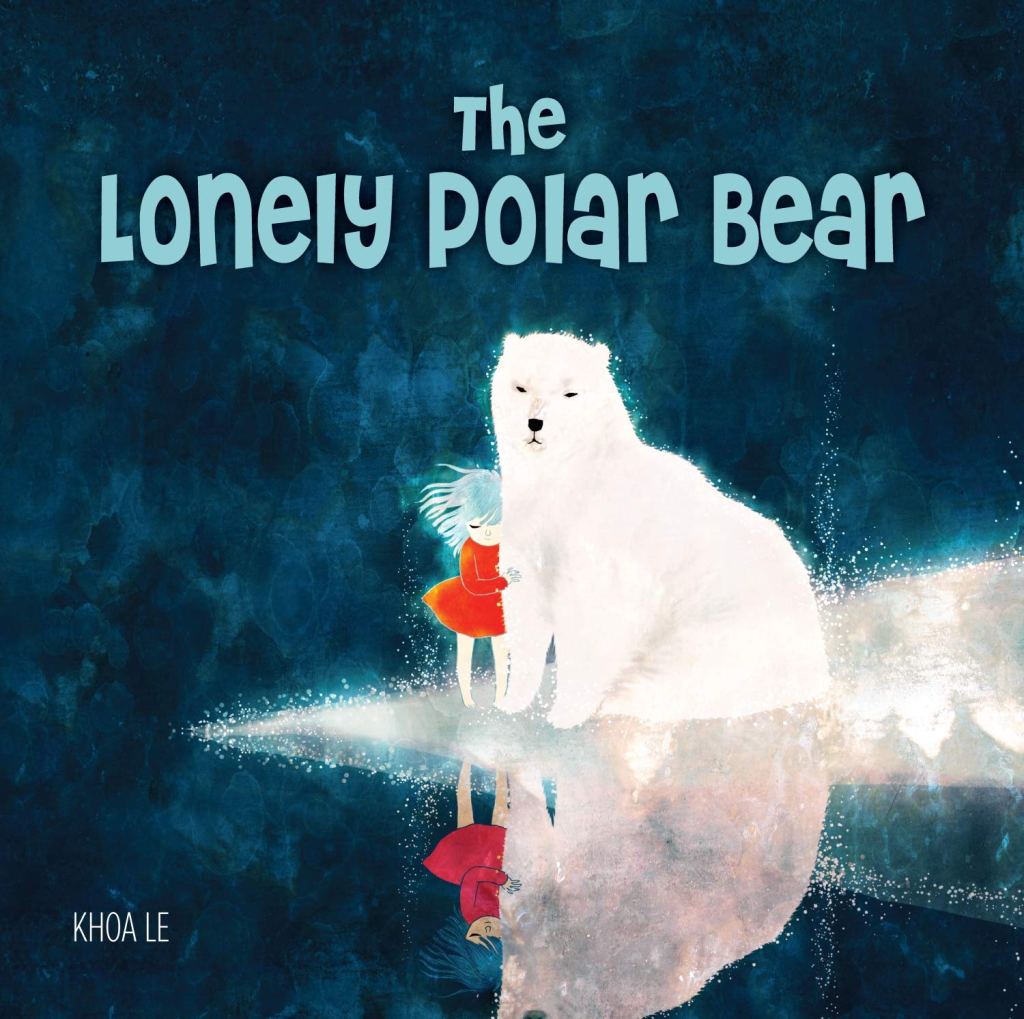
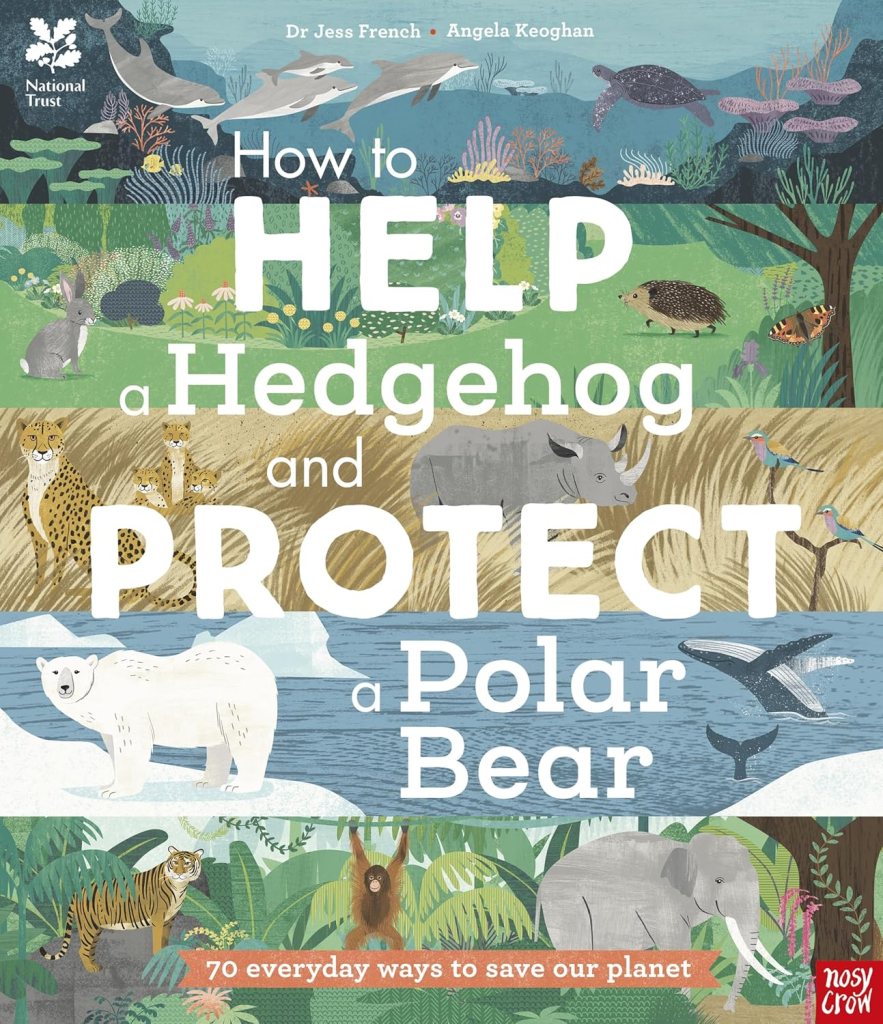
A wider practical point to be made here is that we need to recognise that the sharing of some experiences, and picture story books might be counter productive unless they are  backed up by activities that involve the child in contributing to solutions, that counter fear and feelings of despair, and encourage optimism.  A good example of a book that could be a problem if not presented appropriately in this way is Lonely Polar Bear (Happy Fox Books) by  Khoa Lee, which is all about the dangers of the melting polar ice caps. Contrast this with How To Help A Hedgehog And Protect A Polar Bear (Nosy Crow) by Jess French.

Title:  The Lonely Polar Bear
Author: Khoa Le
Illustrator:
Publisher:  ‎ Happy Fox Books
Publication Date: 2018
ISBN: ‎ ‎ 978-1641240161

“A little polar bear wakes up alone after a furious storm”.

Title:  How to Help a Hedgehog and Protect a Polar Bear
Author: Dr Jess French
Illustrator: Angela Keoghan
Publisher:  ‎ Nosy Crow Ltd
Publication Date:  2022
ISBN: ‎ ‎ 978-1788007078

“Learn how you can save endangered animals and make the world a better place, too!”

See also:
https://www.bbc.co.uk/bitesize/articles/z7sbbdm

Book recommendation:

Community Action

  • Key idea: Taking climate action is urgent – e.g. Invite community leaders into the preschool to explain their climate actions. Create real or pretend sustainable bazaars, action plans, silent marches, etc. (UC3.5)

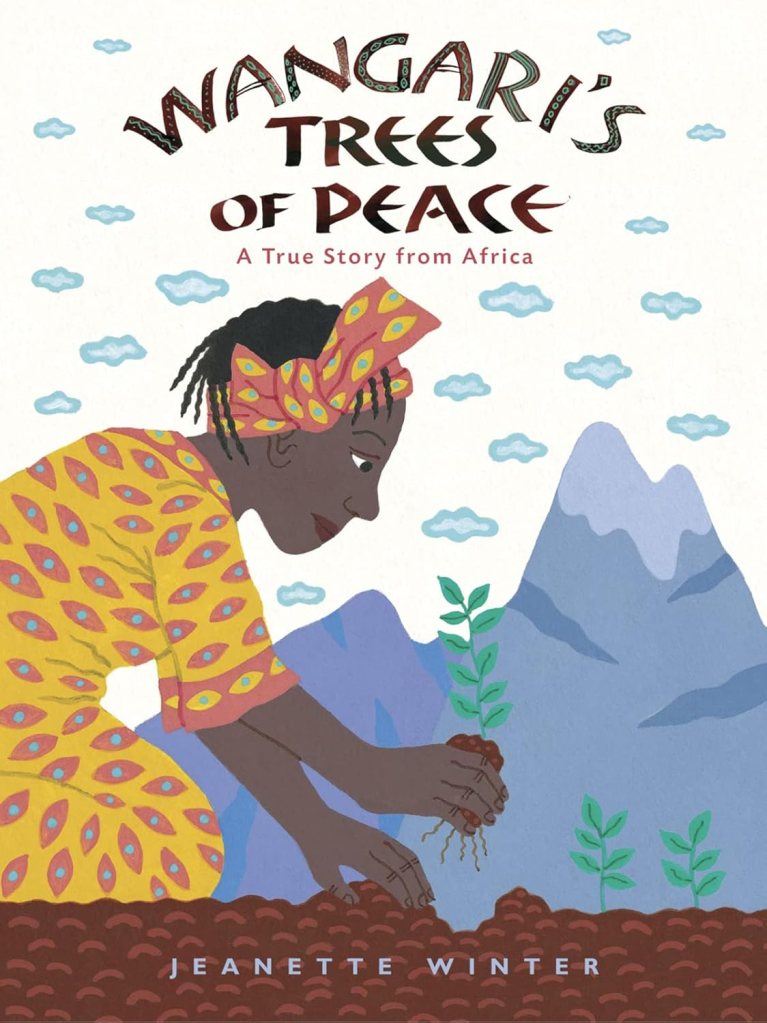
Title:  Wangari’s Trees of Peace
Author: Jeanette Winter
Illustrator: Jeanette Winter
Publisher:  ‎ Harcourt
Publication Date: 2009
ISBN: ‎ 978-0152065454

Wangari showed how a single individual doing ‘the best they can’, can inspire whole communities to take action. The life of Wangari Maathai provides an example and role model for us all. The book reminds us that even small actions can lead to big changes.

Emergent learning:

This book tells the story of an heroic Kenyan woman; Wangari Maathai, who loved nature ever since she was a child. When she grew up, she planted trees that not only changed her country but also set an example for the world. She grew up to become a University Professor, and to win the highest global honour of the Nobel Peace Prize.  Wangari’s story provides children with a wonderful role model, and contradicts any prejudiced assumptions that might otherwise be held about the capabilities of people from African, and of Women.  There is also a wonderful YouTube video well worth sharing with your children.  In the video Wangari tells the story of a hummingbird who, regardless of the challenge, “Always Tries to Do the Best She Can”.  If we all aspire to be as strong as that little Hummingbird then together we can deal with any emergency:

Activity recommendation:

Inviting local members of voluntary organisation or the local council into your child’s nursery to speak to the children may seem daunting but don’t forget most of them will have their own children and even if they don’t, a few words encouragement and advice on how to address young children will usually suffice. Climate action is urgent and we need to take action as individuals and as communities.

See also:
https://www.facebook.com/ProfWangariMaathai

Other Book recommendations:

Sustainable Citizenship

  • Key idea: Humans and other living things are dependent on the natural world – e.g. participating in conservation and sustainability activities that connect your child with nature such as making compost, and examining the interaction of living organisms under the soil (UC3.4).

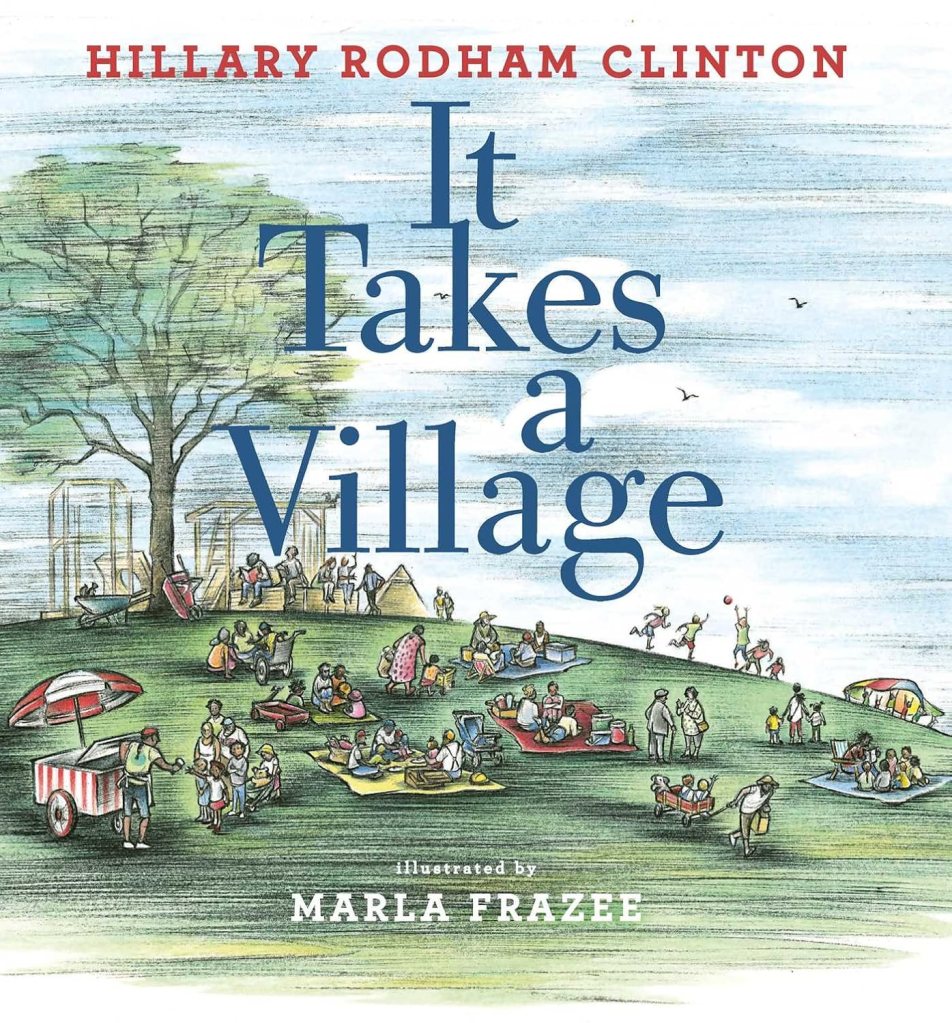
Title:  It Takes a Village
Author: Hilary Rodham Clinton
Illustrator: Marla Frazee
Publisher:  ‎ Simon & Schuster
Publication Date: 2017
ISBN: ‎ 978-1471166976

“All kinds of people working together, playing together, and living together makes their village a better place and many villages coming together can make a better world”.

Emergent learning:

Our own behaviour as adult role models is crucially important.  Young children learn to understand what is fair, and what is unfair, at an early age. If we demand they do something, and simultaneously show them that we are unwilling to do ourselves, we demonstrate hypocrisy. Children always learn more from what the most significant adults in their life DO, than from what they SAY.  So talk to your child about your own daily tasks and responsibilities, and tell them about the pride and satisfaction that you gain from completing them. Just like ‘Democracy’, ‘Equality’ and ‘Social Justice’, ‘Sustainable Citizenship’ is something that we all aspire to achieve, it is a lifetime journey that we can share with our children, celebrating our progress in solidarity with our peers around the world.

Activity recommendation:

It is important for us to give children the experience of taking responsibilities from an early age.  It might be in taking out food waste to make compost, or regular feeding of a household pet.  It is important that we don’t introduce, or treat these responsibilities as duties or chores that children require discipline to carry out.  The trick is to give lots of praise and encourage when the child carries out the task, and then if the task isn’t completed on time, we must show them that we take pleasure in sharing the experience of doing it with them together. 

Other Book Recommendations:

Climate Anxiety and Agency

  • Key idea: It is important to express our emotions – e.g. Learning to share feelings with family, teacher and friends, learning to identify and label basic emotions (happy, sad, scared, angry) in story books and in others (UC3.3).
  • Key Idea: We should support children in feeling empowered and optimistic for the future – Sustainable citizens, our youngest, and their elders together, are contributing towards solving the problems that we face. 

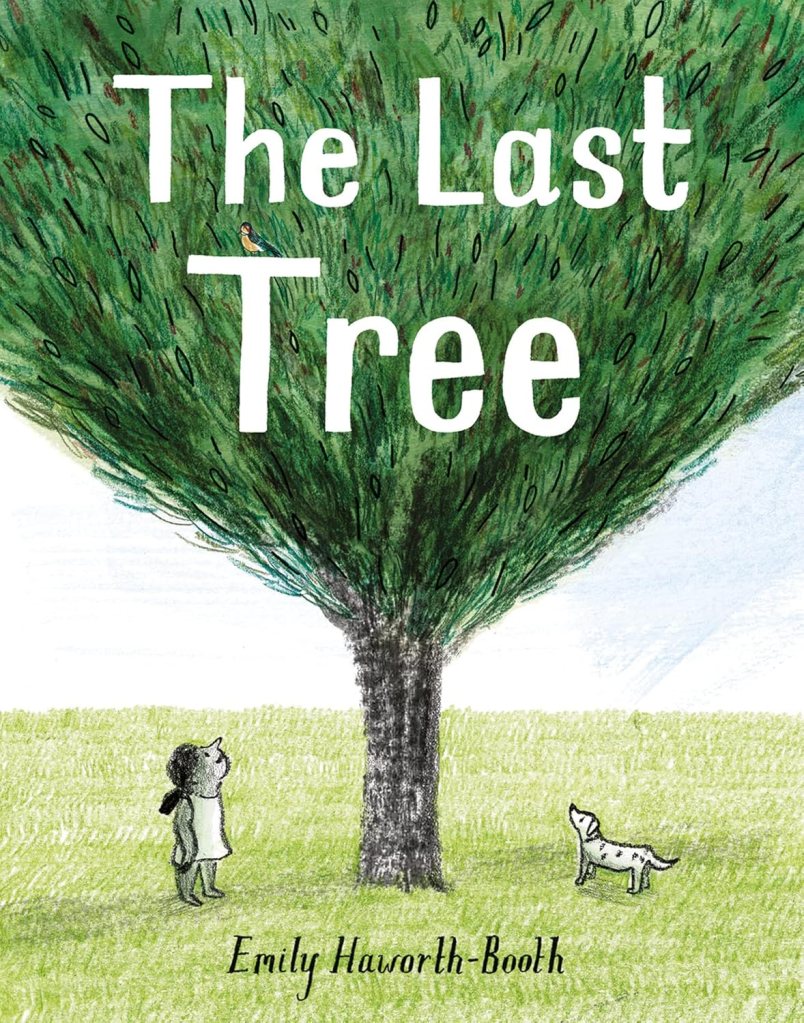
Title:  The Last Tree
Author: Emily Haworth-Booth
Illustrator:
Publisher:  Farshore
Publication Date: 2020
ISBN: ‎ 978-1843654377

Before the community realised the consequences of what they were doing, they cut down most of the trees, the forest becomes thinner, until there is just one last tree standing. It was left for the children to find a solution.

Emergent learning:

Bad things happen and we want our children to grow up to be resilient, that means that we must provide support and encouragement when they face challenges, we mustn’t be over-protective. If we share a picture story book that is focused upon sustainability, and it leaves the child feeling sad, scared or angry then we have failed.  Perhaps we have found the wrong book, or perhaps we have shared it badly – to get it right, what we must remember is that whatever danger, crisis or problem that the story is addressing we must leave the child feeling that there is something that we can do together to help the situation.  We should leave them feeling empowered and optimistic for the future. Sustainable citizens, young and old together can solve the problems that we face. 

Activity recommendation:

We contribute towards early childhood education for sustainable citizenship education whenever we involve children in our day to day sustainable decision making, explaining to them the reasons that we are choosing the sustainable option in our purchase of a particular food item, domestic appliance or vehicle. We can provide positive role models by involving them in our conservation of the natural environment, of energy and in our reductions in waste. We can also help them control and express their emotions freely by talking about our own feelings, and the feeling states of others in story books, and in real life.  Always celebrate the collective progress that is being made to create a more sustainable world and foster the children’s pride in being a part of it.

Other Book Recommendations:

Safety and Resilience

  • Key idea: Climate change causes extreme weather – e.g. Making preparations before a storm, and participating as a team in emergency drills for fire and floods (UC3.2).
  • Key idea: Different weather conditions can affect people’s daily lives – e.g. identifying the effects of extreme weather on the availability of food items (UC5.3).

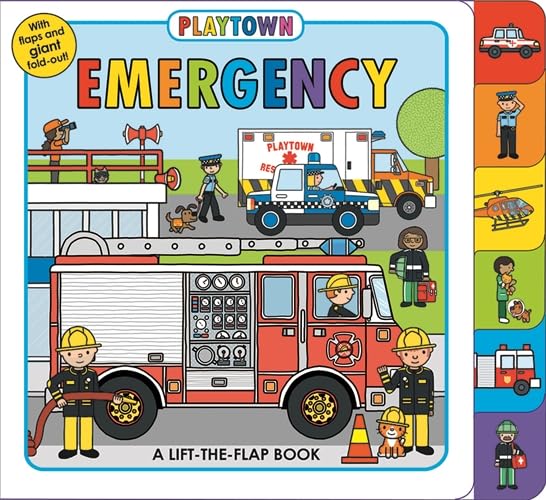
Title:  Playtown: Emergency
Author: Roger Priddy
Illustrator: Priddy Books
Publisher:  Priddy Books
Publication Date:  2016
ISBN: ‎ 978-1783412822

Children will learn about doctors, firefighters, police and rescue crews, as well as the places they work, the vehicles they drive and equipment they use to do their jobs.

Emergent learning:

Extreme weather events effect us all either directly in causing damage to our homes and lives when there are floods, winds etc. or indirectly through community shared costs and effects upon water hygiene, food production, energy disruption etc. We want children to gain confidence in knowing that with a little team work and community spirit, no problem or emergency will ever be insurmountable. 

A very positive and empowering way to introduce young children to safety as a general theme is to focus on the ‘first responders’; the people who come to help us in an emergency.  Address fears directly, fire engines are big and loud alarms are scary but if we know what to do we don’t have to worry and we can help each other.

Activity recommendation:

The main focus should be on emergency prevention, but we must also be prepared and learn about what we should all be doing in an emergency. There are picture story books to support this but a visit to the fire station or visits from e.g. uniformed firefighters and paramedics will be potentially more memorable and effective.  The trick is to prepare such visits in advance, prepare the adult professional on how to talk to young children and prepare the children for what they may learn. 

Book recommendation:

Climate Health and Safety

  • Key idea: Weather patterns and climate affects us – e.g. identifying the actions to be taken in different weather conditions, e.g.  seeking shade and providing extra drinking water during a heat wave, or holding our hat tightly, or tying it around the neck in a strong wind (UC3.1).
  • Key idea: Different weather conditions can affect people’s daily lives – e.g. identifying the effects of extreme weather on the availability of food items (UC5.3).

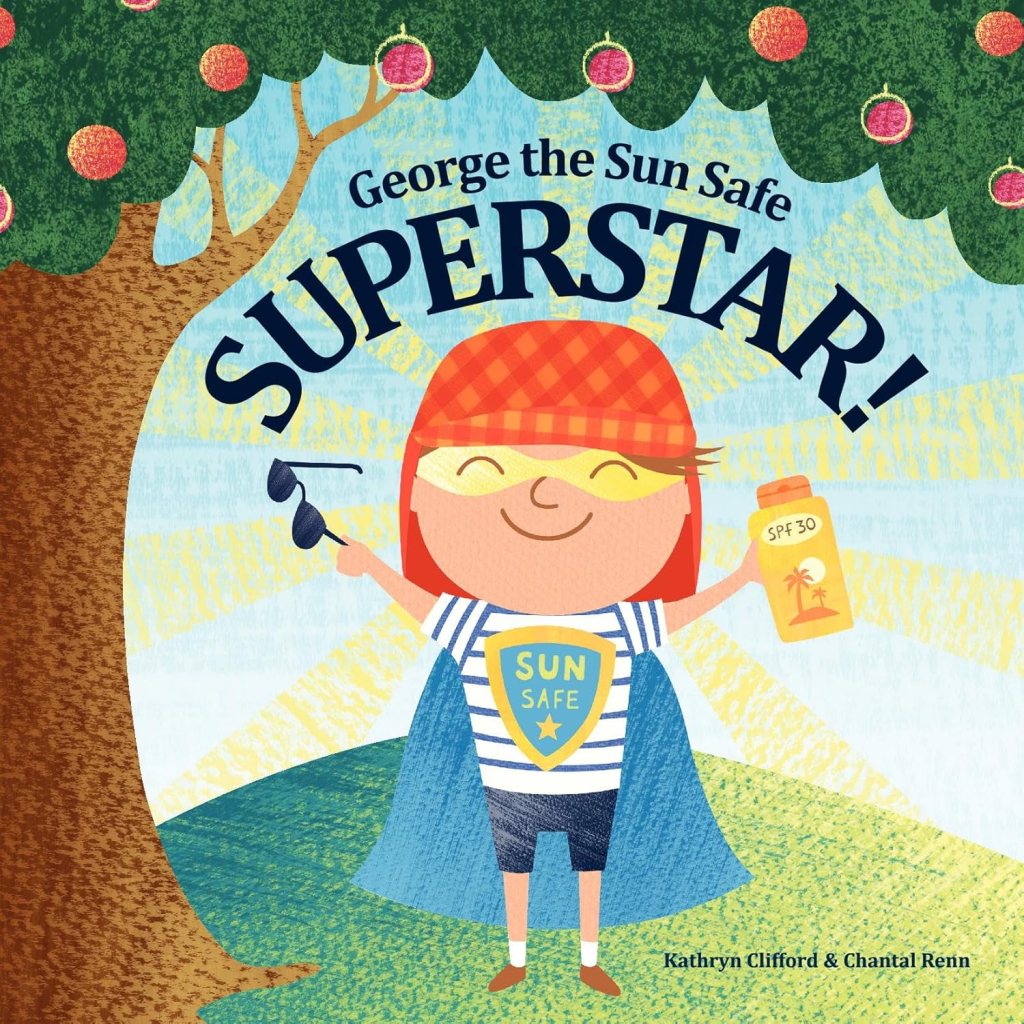
Title:  George the Sun Safe Superstar
Author: Chantal Renn
Illustrator: Kathryn Clifford
Publisher:  FastPrint Publishing
Publication Date: 2012
ISBN: ‎978-1780353173

Helping children learn about the importance of sun safety in a fun and engaging way.

Emergent learning:

We have to be careful with the Sun as it can burn our skin, and it can hurt our eyes if we look at it, but without the Sun we would freeze and have nothing to eat at all.  When the Sun is low in the sky during winter in England we may have some Apples and Pears, but in Taiwan we can harvest apples, strawberries and sugar apples.  When it gets higher in the sky during spring time, in England there is Rhubarb and Strawberries, while in Taiwan there are wax apples, mangoes and loquas.  When the sun is high above us and its hot, in England we get Raspberries and Gooseberries, and in Taiwan there are logan, lychee, pineapple and passionfruit. Later in the year as the Sun begins to become lower in the Autumn, in England we see mostly Apples and Pears, while in Taiwan there are persimmons, pomelos and starfruit. And then it all begins again with Winter, Spring, Summer and Autumn: The seasons of the year.

Activity recommendation:

Visits to supermarkets and growers, and the identification of local produce will support children’s understanding. Also celebrations of harvests, and drawing attention to the economies of seasonal local consumption of food products. Creating a seasonal greengrocer stall for the children’s socio-dramatic play provides the added advantage of supporting emergent literacy with the advertised product names, and emergent numeracy with the prices.

Other Book recommendations:

Human Impact and Role

  • Key idea: The impact of humans on biodiversity –  .g. Comparing the wild life populations of cities, rural and wilderness areas (UC2.5).
  • Key idea: Human protection of nature is essential – e.g. Stewardship activities in support of local wildlife, providing bird tables, bat and bird boxes, bug hotels etc. (UC2.6)

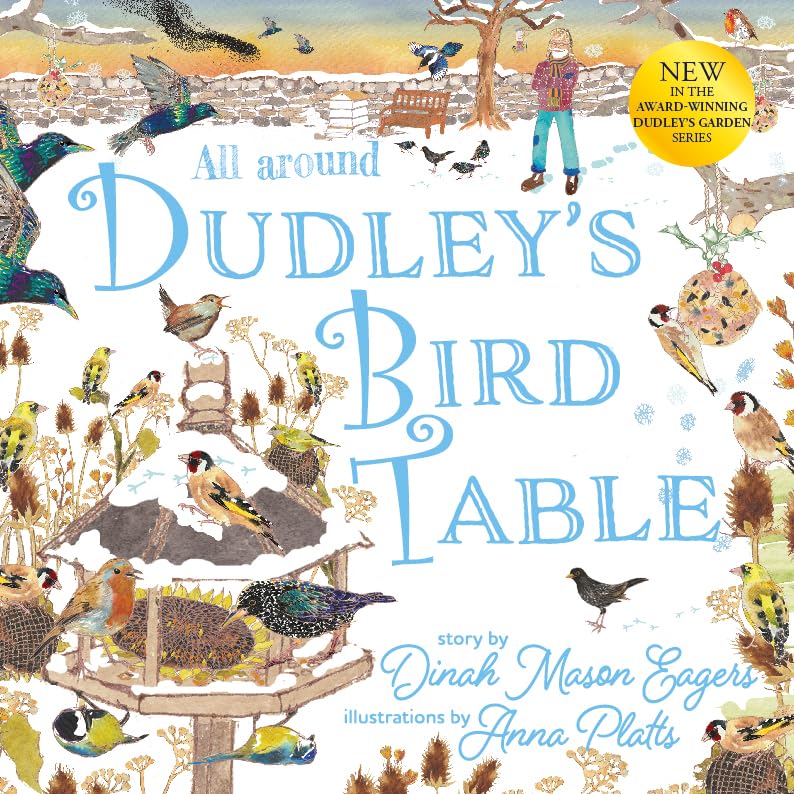
Title:  All Around Dudley’s Bird Table
Author: Dinah Mason Eagers
Illustrator: Anna Platts
Publisher:  Crumps Barn Studio
Publication Date: 2024
ISBN: ‎ 978-1915067678

A delightful story about Billy and Betty Bluetit, Robin, Mr Magpie, and all the other birds who visit Dudley’s Bird table.

Emergent learning:

Where wild flowers, hedgerow and trees are lost due to building and industrialisation we can involve the children in planting and growing and restoration projects. The children can also contribute to local food production through pre-school gardens and community allotments. In terms of animal wildlife, in England we often see Bluetits, and we have recommended the above book for parents and educators in Taiwan as well. But Bluetit’s don’t fly to Taiwan, although they do have Blue Magpie’s there, which in England we don’t, and in Taiwan they have Wren’s, Robin’s and Starlings, and many more birds that children can learn the names of such as Barbet’s and Bulbuls, Sparrows and Pigeons – and the children can put out their own seeds and water to support them.  In fact there are many activities that children can engage in to support the local wildlife, in addition to providing bird tables, they may make and/or install bat and bird boxes, and bug hotels.  In the process they will begin to learn about, and learn to care about, animal feeding habits, habitats, and migration patterns. If we encourage international preschool partnership projects the children can also learn from each other, and learn that all around the world people car and are working towards a more sustainable future. One example for Kenya.

Activity recommendation:

The impact of human settlement on the natural world is obvious as soon as we begin to compare the wildlife to be seen in the countryside to that in the inner cities. There is a wonderful free Smartphone App that has brought a great deal of joy to many families – it recognises bird songs, giving you the name of the bird, and further information that you can share with your children. It is called the Merlin Bird ID, produced by Cornell Labs – download it online, from Apple Store or Google Play.

Reference: https://merlin.allaboutbirds.org/

Other Book Recommendations:

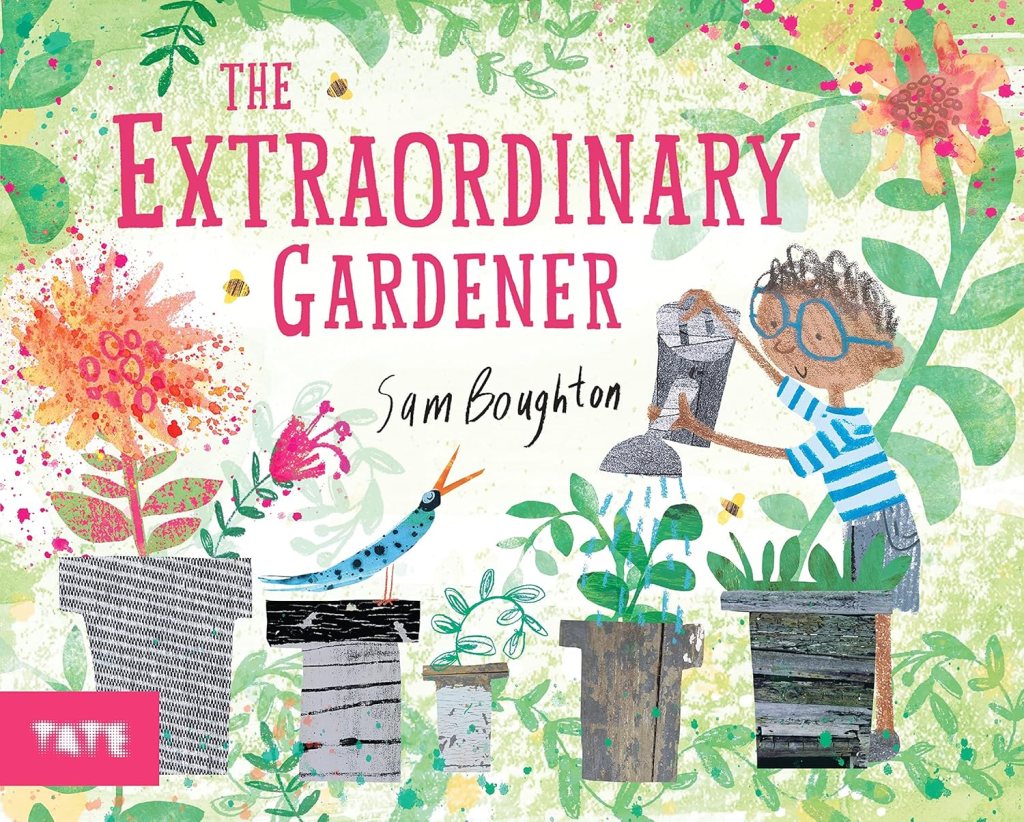
Title:  The Extraordinary Gardener
Author: Sam Boughton
Illustrator: Sam Boughton
Publisher: ‎ Tate Publishing
Publication Date:  2020
ISBN: ‎ 978-1849766890