- Key idea: There are different forms of transportation – e.g. Producing a tally of the forms of transport used by children and staff, identifying more sustainable alternatives (UC6.5)
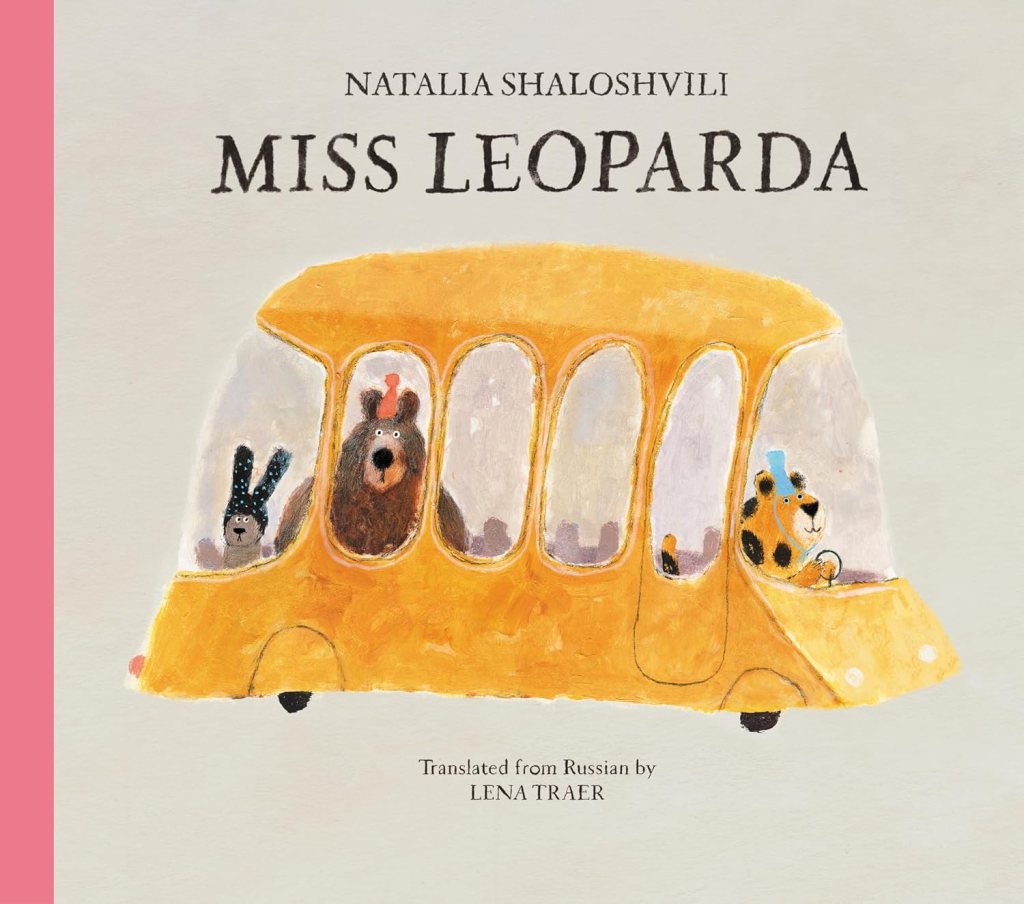
Title: Miss Leoparda
Author: Natalia Shaloshvili
Translator: Lena Traer
Publisher: Enchanted Lion Books
Publication Date: 2024
ISBN: 978-1592704125
“An ecologically minded book about a bus-loving, tree-loving, leopard”.


Emergent learning:
It might be assumed that sustainable transportation is too difficult a concept for young children to understand. But they can learn about different forms of transportation, and they can learn about sharing, and about waste, so from an emergent curriculum perspective, we provide children with the knowledge and experiences that they will be able to pull together later in their minds, to make the concept meaningful.
We can observe the progression young children make in their learning and development when we look at the increasingly sophisticated activities that they engage in during their free play. Piaget called these activities ‘sensory motor schemes’, and there have been many books written about how adults can encourage and develop them further.
Transportation has been identified as a particularly common scheme that children discover and find fascinating in their play. We provide more explore the idea of schemes further on our online page.
Activity recommendation:
One of the earliest Schemes that you will see children aged 2 to 4 spontaneously playing is “Containing” they often spend extended periods of time putting things into containers and then taking (dropping or pouring) them out again. If you give them the opportunity they will put themselves into containers too. It’s a fascinating new accomplishment for them. Another very early scheme involves following ‘Trajectories’ – This may involve throwing or dropping things, rolling things along the floor or drawing/painting lines. When these two schemes come together in a child’s pre-verbal conception of ‘Transporting’, it involves them putting things into a container and transporting it across a trajectory. They may be using a shopping bag, a baby stroller, a wheelbarrow or a toy truck, but once discovered, they find this combined scheme fascinating, and educators who observe the scheme can support the learning by giving them ever more varied resources to transport and to transport things in. Most young children can be observed taking this strong interest in transporting at some point in their free play between the ages of three and five, and this provides us with an especially rich opportunity to talk about sustainable and efficient transport alternatives and about sharing public transport.
A child’s ‘Rotation’ scheme, often evident in their fascination with wheels provides another way into the transportation topic.
Other book recommendations:
 Involve Me