Sustainable Citizenship

  • Key idea: Humans and other living things are dependent on the natural world – e.g. participating in conservation and sustainability activities that connect your child with nature such as making compost, and examining the interaction of living organisms under the soil (UC3.4).
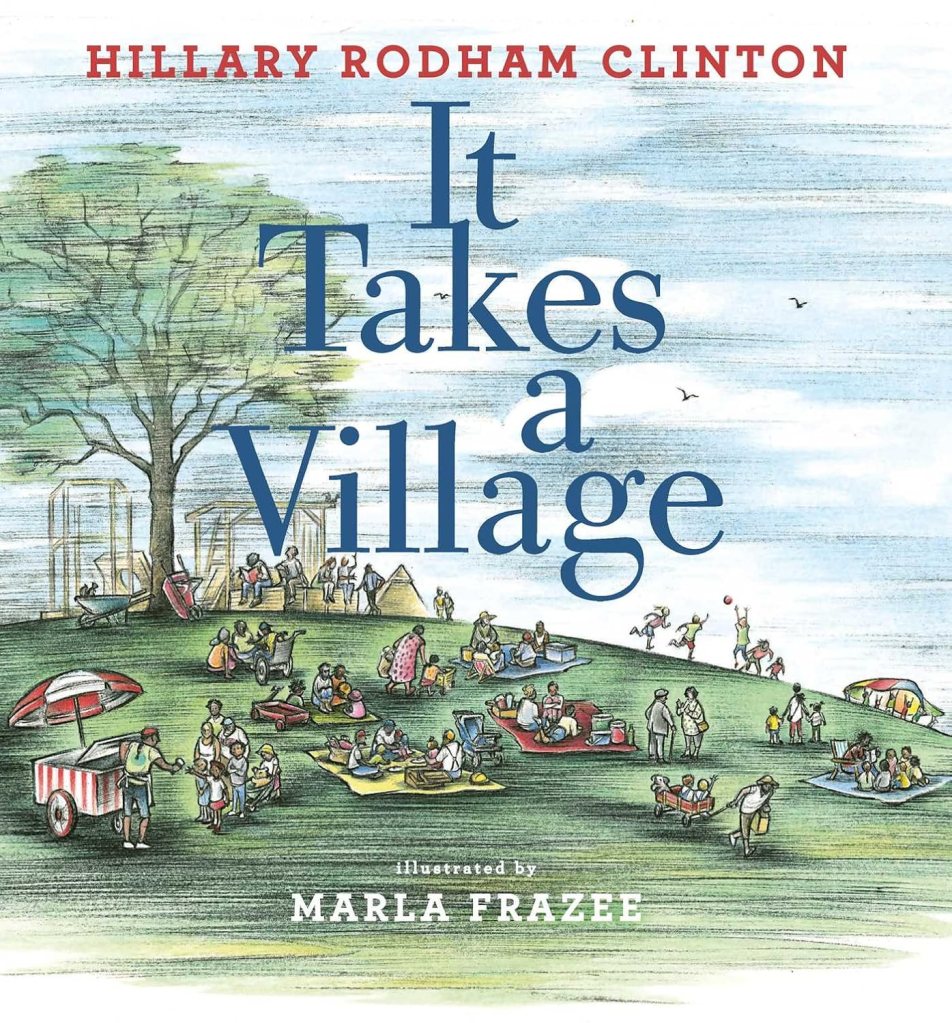
Title:  It Takes a Village
Author: Hilary Rodham Clinton
Illustrator: Marla Frazee
Publisher:  ‎ Simon & Schuster
Publication Date: 2017
ISBN: ‎ 978-1471166976

“All kinds of people working together, playing together, and living together makes their village a better place and many villages coming together can make a better world”.


Emergent learning:

Our own behaviour as adult role models is crucially important.  Young children learn to understand what is fair, and what is unfair, at an early age. If we demand they do something, and simultaneously show them that we are unwilling to do ourselves, we demonstrate hypocrisy. Children always learn more from what the most significant adults in their life DO, than from what they SAY.  So talk to your child about your own daily tasks and responsibilities, and tell them about the pride and satisfaction that you gain from completing them. Just like ‘Democracy’, ‘Equality’ and ‘Social Justice’, ‘Sustainable Citizenship’ is something that we all aspire to achieve, it is a lifetime journey that we can share with our children, celebrating our progress in solidarity with our peers around the world.

Activity recommendation:

It is important for us to give children the experience of taking responsibilities from an early age.  It might be in taking out food waste to make compost, or regular feeding of a household pet.  It is important that we don’t introduce, or treat these responsibilities as duties or chores that children require discipline to carry out.  The trick is to give lots of praise and encourage when the child carries out the task, and then if the task isn’t completed on time, we must show them that we take pleasure in sharing the experience of doing it with them together. 

Other Book Recommendations:
Climate Anxiety and Agency

  • Key idea: It is important to express our emotions – e.g. Learning to share feelings with family, teacher and friends, learning to identify and label basic emotions (happy, sad, scared, angry) in story books and in others (UC3.3).
  • Key Idea: We should support children in feeling empowered and optimistic for the future – Sustainable citizens, our youngest, and their elders together, are contributing towards solving the problems that we face. 

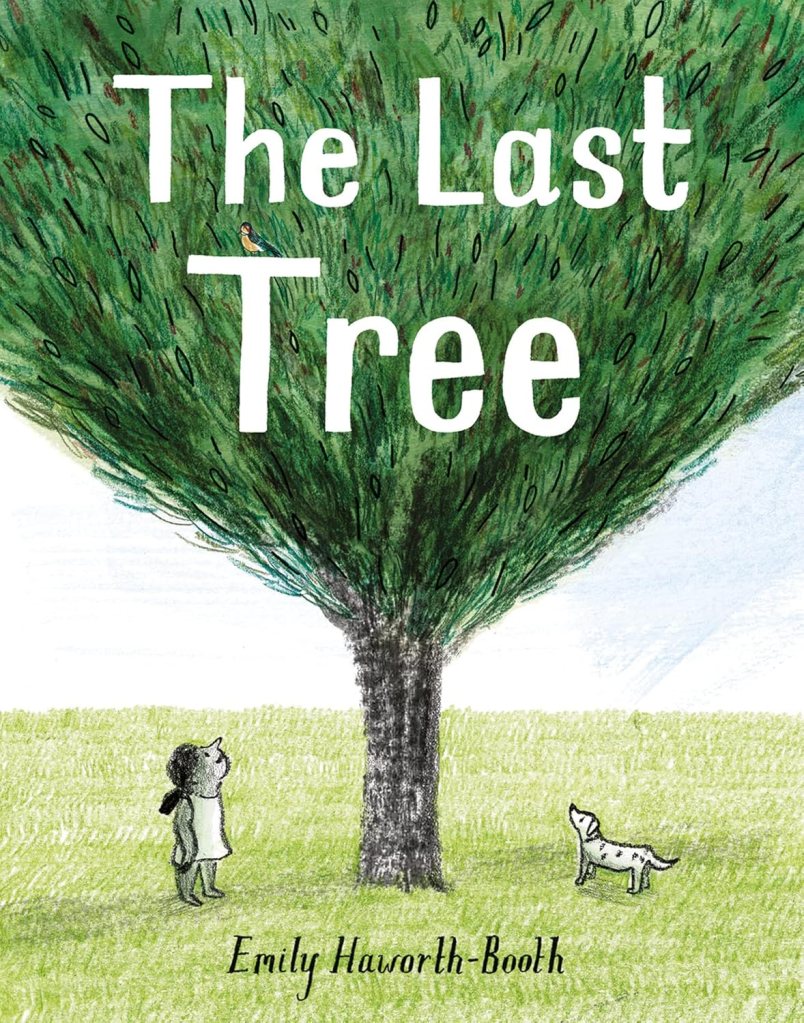
Title:  The Last Tree
Author: Emily Haworth-Booth
Illustrator:
Publisher:  Farshore
Publication Date: 2020
ISBN: ‎ 978-1843654377

Before the community realised the consequences of what they were doing, they cut down most of the trees, the forest becomes thinner, until there is just one last tree standing. It was left for the children to find a solution.

Emergent learning:

Bad things happen and we want our children to grow up to be resilient, that means that we must provide support and encouragement when they face challenges, we mustn’t be over-protective. If we share a picture story book that is focused upon sustainability, and it leaves the child feeling sad, scared or angry then we have failed.  Perhaps we have found the wrong book, or perhaps we have shared it badly – to get it right, what we must remember is that whatever danger, crisis or problem that the story is addressing we must leave the child feeling that there is something that we can do together to help the situation.  We should leave them feeling empowered and optimistic for the future. Sustainable citizens, young and old together can solve the problems that we face. 

Activity recommendation:

We contribute towards early childhood education for sustainable citizenship education whenever we involve children in our day to day sustainable decision making, explaining to them the reasons that we are choosing the sustainable option in our purchase of a particular food item, domestic appliance or vehicle. We can provide positive role models by involving them in our conservation of the natural environment, of energy and in our reductions in waste. We can also help them control and express their emotions freely by talking about our own feelings, and the feeling states of others in story books, and in real life.  Always celebrate the collective progress that is being made to create a more sustainable world and foster the children’s pride in being a part of it.

Other Book Recommendations:

Safety and Resilience

  • Key idea: Climate change causes extreme weather – e.g. Making preparations before a storm, and participating as a team in emergency drills for fire and floods (UC3.2).
  • Key idea: Different weather conditions can affect people’s daily lives – e.g. identifying the effects of extreme weather on the availability of food items (UC5.3).

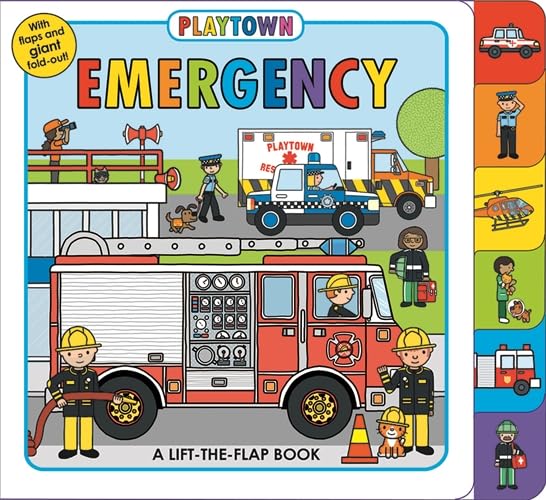
Title:  Playtown: Emergency
Author: Roger Priddy
Illustrator: Priddy Books
Publisher:  Priddy Books
Publication Date:  2016
ISBN: ‎ 978-1783412822

Children will learn about doctors, firefighters, police and rescue crews, as well as the places they work, the vehicles they drive and equipment they use to do their jobs.

Emergent learning:

Extreme weather events effect us all either directly in causing damage to our homes and lives when there are floods, winds etc. or indirectly through community shared costs and effects upon water hygiene, food production, energy disruption etc. We want children to gain confidence in knowing that with a little team work and community spirit, no problem or emergency will ever be insurmountable. 

A very positive and empowering way to introduce young children to safety as a general theme is to focus on the ‘first responders’; the people who come to help us in an emergency.  Address fears directly, fire engines are big and loud alarms are scary but if we know what to do we don’t have to worry and we can help each other.

Activity recommendation:

The main focus should be on emergency prevention, but we must also be prepared and learn about what we should all be doing in an emergency. There are picture story books to support this but a visit to the fire station or visits from e.g. uniformed firefighters and paramedics will be potentially more memorable and effective.  The trick is to prepare such visits in advance, prepare the adult professional on how to talk to young children and prepare the children for what they may learn. 

Book recommendation:

Human Impact and Role

  • Key idea: The impact of humans on biodiversity –  .g. Comparing the wild life populations of cities, rural and wilderness areas (UC2.5).
  • Key idea: Human protection of nature is essential – e.g. Stewardship activities in support of local wildlife, providing bird tables, bat and bird boxes, bug hotels etc. (UC2.6)

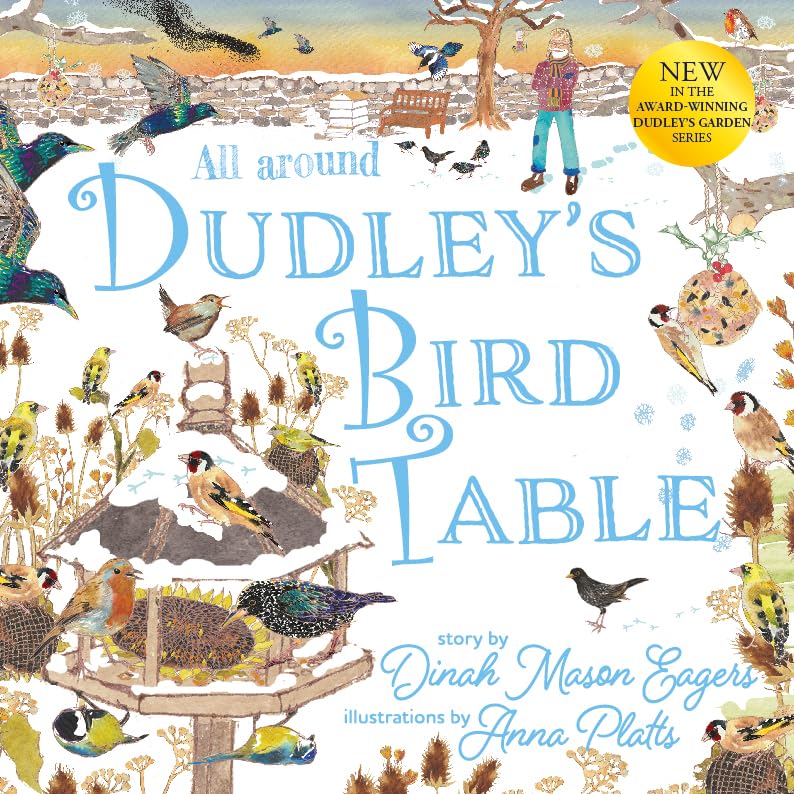
Title:  All Around Dudley’s Bird Table
Author: Dinah Mason Eagers
Illustrator: Anna Platts
Publisher:  Crumps Barn Studio
Publication Date: 2024
ISBN: ‎ 978-1915067678

A delightful story about Billy and Betty Bluetit, Robin, Mr Magpie, and all the other birds who visit Dudley’s Bird table.

Emergent learning:

Where wild flowers, hedgerow and trees are lost due to building and industrialisation we can involve the children in planting and growing and restoration projects. The children can also contribute to local food production through pre-school gardens and community allotments. In terms of animal wildlife, in England we often see Bluetits, and we have recommended the above book for parents and educators in Taiwan as well. But Bluetit’s don’t fly to Taiwan, although they do have Blue Magpie’s there, which in England we don’t, and in Taiwan they have Wren’s, Robin’s and Starlings, and many more birds that children can learn the names of such as Barbet’s and Bulbuls, Sparrows and Pigeons – and the children can put out their own seeds and water to support them.  In fact there are many activities that children can engage in to support the local wildlife, in addition to providing bird tables, they may make and/or install bat and bird boxes, and bug hotels.  In the process they will begin to learn about, and learn to care about, animal feeding habits, habitats, and migration patterns. If we encourage international preschool partnership projects the children can also learn from each other, and learn that all around the world people car and are working towards a more sustainable future. One example for Kenya.

Activity recommendation:

The impact of human settlement on the natural world is obvious as soon as we begin to compare the wildlife to be seen in the countryside to that in the inner cities. There is a wonderful free Smartphone App that has brought a great deal of joy to many families – it recognises bird songs, giving you the name of the bird, and further information that you can share with your children. It is called the Merlin Bird ID, produced by Cornell Labs – download it online, from Apple Store or Google Play.

Reference: https://merlin.allaboutbirds.org/

Other Book Recommendations:

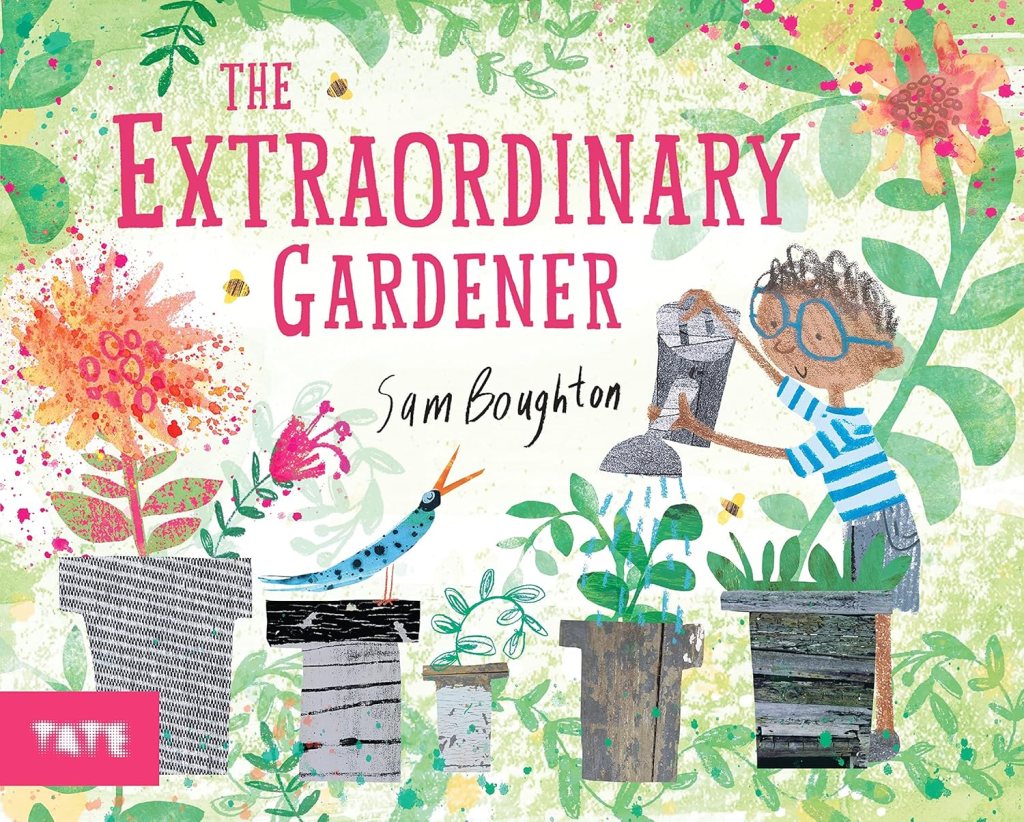
Title:  The Extraordinary Gardener
Author: Sam Boughton
Illustrator: Sam Boughton
Publisher: ‎ Tate Publishing
Publication Date:  2020
ISBN: ‎ 978-1849766890

The Importance of Clean Air

  • Key idea: The plants and animal life need clean air to help them grow – e.g. Observing reduced variety and damage to leaves in different locations (UC1.3).

Title: Every Breath We Take
Author: Maya Ajmera
Illustrator: Dominique Browning
Publisher: Harlesbridge Pubs
Publication Date: 2016
ISBN: 978-1580896160

This book underscores the importance of clean air to all life on earth. It also reminds us that sometimes the air can be dirty, and it can be cleaned up.

Emergent learning:

There are two key ideas for us here: First, all the plants and animals of the world need clean air to help them grow. Second, human activity affects air quality.

Children learn about their natural environment, and they learn about the properties of various materials through their freedom to play, and this is why most preschools provide a sand pit, soil for planting, and natural materials and collections of blocks, beads and fabrics. Preschools also often have a water play area so that children begin to learn about the behaviour of fluids, about capacity and volume.

We can also encourage “Air Play”: Children probably wouldn’t learn very much about air at all, if we didn’t draw their attention to it. It’s invisible. But it’s the stuff inside bubbles, and it can hold a kite in the air – and if we go for a run holding an umbrella or a cardboard ‘sail’ in front of us, we can feel how it holds us back and begin to appreciate the streamlined shapes of cars, and boats and ‘airplanes’.

Activity recommendation:

Young children can also learn to be concerned about air pollution when we draw their attention to chimneys, and if we take them out wiping soot off roadside street signs, the source can usually be observed quite clearly in vehicle exhausts. A survey of nearby streets simply involved using standard ‘wipes’ and a display of findings.

https://www.facebook.com/CatskillMountainkeeper/videos/story-time-every-breath-we-take/559468208300466

Other Book recommendations: