Embracing Nature

  • Key idea: Human beings have an innate need to connect with nature – e.g. Promoting a love of nature and regular experience of its positive impact. (UC6.1)
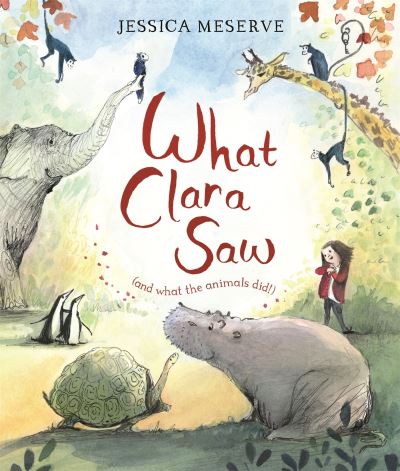
Title:  What Clara Saw
Author: Jessica Meserve
Illustrator: Jessica Meserve
Publisher:  ‎ Macmillan
Publication Date:  2019
ISBN:‎ 978-1509866601

“Can a chimp chat, or a tortoise feel teary? Do animals help each other and do they feel love?”.

Emergent learning:

What is it about nature that is so wonderful? 

It is the variety, the diversity, and the ecological wonder of our recognition of natural interdependence .  Every plant, animal, fish, bird insect on the planet, humanity included are part of a diverse living community, and we rely on each other and we must learn to respect each other.

In the early years it is the child’s sensory experience of their interactions with the physical environment that dominates their learning.  That is why it is important to ensure young children enjoy a wider range of physical stimulation, this is also why it is important to take them out into the natural environment, and why it is important for them to gain experience of different terrains and environments, to play in, and to play with. These include different media such sand and water . Many significant environmental features are so common in the child’s life that they will not be noticed, unless we draw their attention to them.  This includes the natural wildlife which needs to be protected.   In early childhood education, we often guide children to love animals and cherish life. While most children can understand this idea and express agreement in words, in daily life, when they actually encounter small creatures (e.g. a spider or a caterpillar), they may still act on curiosity or impulse and harm it.  While it may often be assumed that it is enough for children to spend lots of time outside enjoying the natural environment, that really isn’t sufficient in itself if we want them to learn to have care and concern for the natural world. There are serious problems in our natural environment, and we should respect our children enough to avoid hiding these problems from them.

Animals are hurt needlessly, and even sometimes killed just for sport. Climate change is another problem that we have all contribute towards, and it will have a significant effect upon our children’s lives.  These subjects are constantly addressed in the media and even the youngest children ask us questions about it. We want to prepare our children for the future but many of us worry that talking about our contradictory behaviours, and  the environmental dangers, and the fate of endangered species will  encouraging despair and anxiety.

The answer to this apparent dilemma is  help them feel that they can make a difference and to celebrate our collective human efforts to mitigate the effects of climate change.  This is what educators mean when they refer to early childhood education for sustainable citizenship, its all about encouraging children to recognise that they are not victims, they have agency and can make a difference.  

For health and safety reasons we draw the child’s attention to the importance of hygiene in the early years, and the dangers of steep drops, deep water, and electricity.  Parents and teachers also consider topics such as changes in the weather, and our responses in terms of gaining shelter and protective clothing of value.  With the advent of global warming, the child’s future understand of the subject requires that they appreciate the heating effects of the sun, and the effects of obstructions to the sun provided by shade, and the ‘greenhouse’ capture of heat that is felt whenever we find ourselves in sunlight under glass.

Activity recommendation:

Being wary of new a new environmental encounter is a good survival instinct but one way we learn to respect differences is to recognise similarities. Charles Darwin is famous for his 1859 book The Evolution of Species... but he also wrote The Expression of the Emotions in Man and Animals in 1872 and a legacy of that in recent years has been a greater recognition of the embodied nature of many human emotional expressions. We are all animals. Unfortunately children often grow up to disrespect and/or fear many animals. In some cultural contexts children may also grow up to fear even very superficial differences between people, and they may even begin to adopt cultural prejudices.  This isn’t sustainable.  This is why many preschools around the world ensure that their play resources include small world people and dolls with different skin colours.

We live in a world where historical conflicts and competition have often encouraged the development of fear and prejudices.  Yet diversity provides the underlying strength and resilience of every ecological system.  This holds throughout nature, and is equally true of every social, cultural, and commercial organisation or nation state. Creativity requires a diversity of ideas and of experience.  Prejudices are undermined when we recognise that the diversity to be found within every supposed human group is actually greater than the differences between them. This applies to the nations of the world, as well as to gender and different cultural and ethnic groups. In all of this it is especially important to recognise that skin colouration is a variation that is literally only  ‘skin deep’ .  Modern science has shown that the outdated ideas of their being separate biological ‘Races’ were simply wrong…
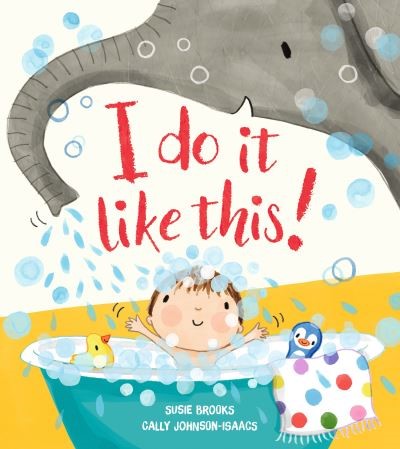
Title:  I do it like this!
Author: Susie Brooks
Illustrator: Cally Johnson-Isaacs
Publisher: Kane Miller Books
Publication Date:  2019
ISBN:‎ ‎ 978-1610678261

“A fun, interactive book of comparisons”.

Other Book recommendations:

Recommendation reason:
We all have a Role to Play

  • Key idea: We all have a role to play – e.g. involving the children in awareness raising or practical campaigns in supporting environmental sustainability (UC4.4).
  • Key idea: Care for our environment will contribute to our individual and social wellbeing – e.g. Celebrating the sustainable actions of the preschool, local. National and international community (UC5.5).
  • Key idea: Children learn that they have AGENCY when they grow and make things, they learn that their efforts and choices have a tangible impact. In the process children gain a sense of belonging, self-efficacy, competence, resilience and responsibility, all crucially important in their development of a strong sense of identity and independence.

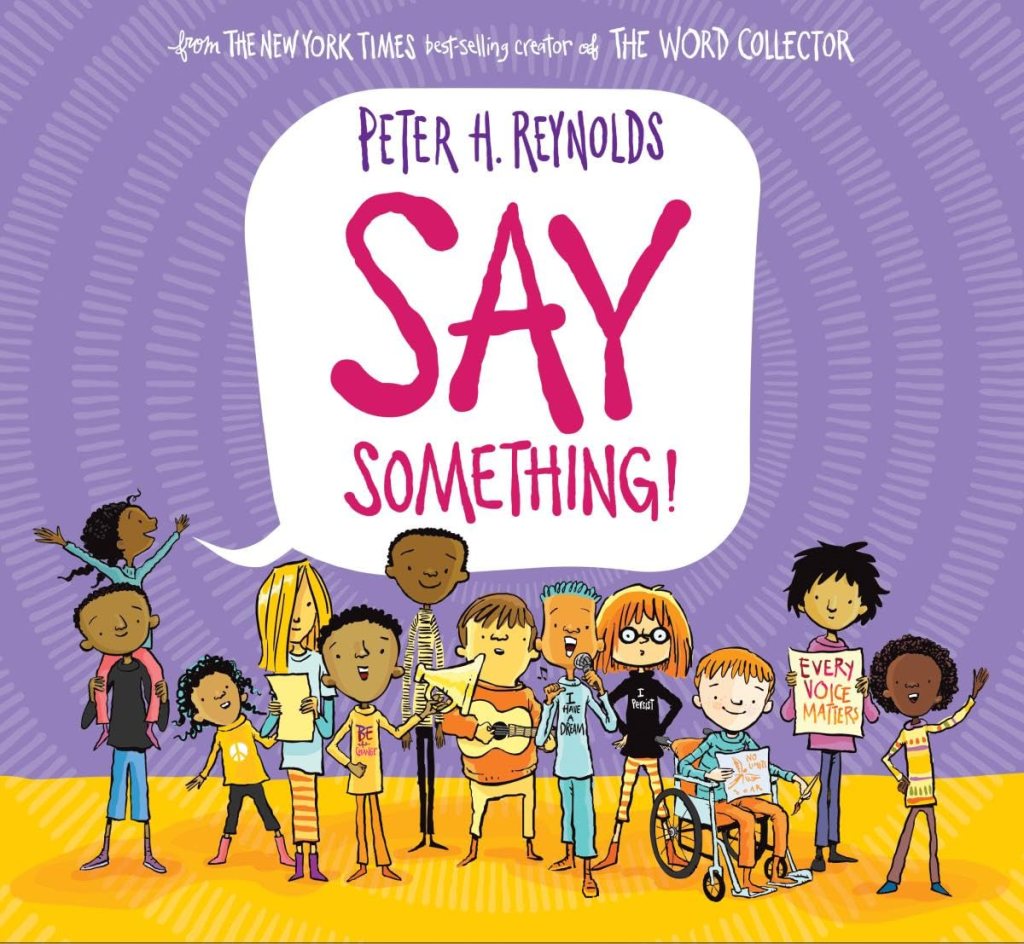
Title:  SAY Something
Author: Peter Reynolds
Illustrator: Alison Jay
Publisher:  Orchard Books
Publication Date: 2019
ISBN: 978-0545865036

A book that encourages children to find their own voice – through words, art, actions, or simple acts of kindness.

Emergent learning:

Climate Change Action requires international solidarity, co-operation and collaboration which in turn requires humility and mutual respect.  No individual, and no nation, can achieve what is required to save the planet on their own, and yet we live in a world where historical conflicts and competition have often encouraged the development of prejudices and mistrust.

To some extent concerns about people we are less familiar with might be considered inevitable, from their very first weeks baby’s develop attachment to the familiar faces and sounds that they have heard from their parents and primary carers. These attachments are important, but in the absence of any experience of alternative skin colours and languages, prejudiced ideas may later come to be uncritically accepted. That is why most nurseries encourage children to play with dolls that have different skin colours. Picture story books showing the common concerns of people and children from around the world can also provide an important contribution, and in early childhood Language Awareness Education also has a major contribution to make. 

Activity recommendation:

A recurring theme throughout all of these episodes has been the importance of involving the children in sustainable practices. If we are concerned to provide the foundations for our sustainable citizens of the future, we must encourage sustainable habitual actions, and habits of mind.   Where we share sustainable activities with the children they benefit doubly, because they can see that the significant adult role models in their lives also consider them important.

Growing food, herbs and flowers for a purpose is a wonderfully sustainable, and fulfilling activity for children and colleagues to engage in and there are a wide range of different gardening activities that can be implemented in nurseries, schools and homes.  Even more importantly the child will come to recognise their own agency, their ability to change and make the world a better more sustainable place which will have long lasting benefits when they come later to bring up children of their own.

As an educational subject, Design and Technology education also has a role to play. It involves children in designing, making and evaluating products out of resistant materials, adding value and creating food products, and considerations of conservation and nutrition. 

Technology and its products are shaped by, but also serves to shape society, our behaviours,  institutions and relationships.  Education for citizenship must aim to develop technological awareness, so that our children grow up to be sensitive to the social and cultural implications of technology and their role as critical consumers and creators.

Bilingual Picture Story Books and Videos may be especially valuable in supporting children’s emergent language awareness.  A familiar story heard initially in the child’s mother tongue will be recognised when presented in a different language.  Children are often delighted to discover the cleverness of other languages.

Other Book recommendations:

Recommendation reason:

Helping Each Other

  • Key idea: Climate effects different groups in different ways – e.g. encouraging support and empathy for different groups such as the elderly, those in more vulnerable environments locally and abroad.
  • Key idea: Who we are, and the circumstances that we live in, can create more negative experiences – e.g. encouraging support and empathy for groups and individuals treated unfairly.

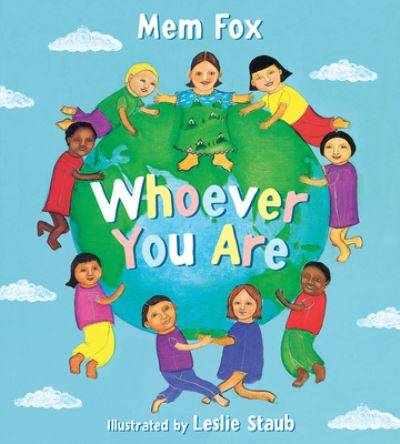
Title:  Whoever You Are
Author: Mem Fox
Illustrator: Leslie Staub
Publisher:  ‎:Houghton Mifflin
Publication Date: 2017
ISBN: ‎ 978-1328895813

“Although children around the world may look different, speak different languages, and live in different places, their hearts are the same. They all laugh, cry, and feel love just like us”.

Emergent learning:

In the context of education for sustainability the first key idea here is that Climate effects different groups in different ways. Who we are, and the circumstances that we live in, can create especially  negative experiences. Human interdependence is an ecological fact of nature, we all depend upon each other, we depend on our family, neighbours, and climate change has shown us now better than ever before how we all depend on everyone else around the world.  Yet competitive national, cultural and ethnic divisions often get in the way of us co-operating and collaborating properly to achieve peace and prosperity for everyone. 

But scientific evidence has repeatedly shown that there is more diversity within human populations and groups than there is between these groups.  Humanity isn’t divided into distinct biological ‘races’, and even gender might be considered more of a continuous, rather than a categorical variable. The physical differences between us provide complementary talents and capabilities.  

The latest research demonstrates the rich neurodiversity that we all share.  We may all be unique individuals and different, but in other respects we are all the same and we are equal.  It is social and cultural prejudices and fear that create barriers to our natural instincts to provide cooperation and mutual support, and for the sake of Peace and Sustainability education these false narratives must be countered from an early age.

Activity recommendation:

Being able to care for others and offer comfort, empathy is an important ability that children can begin to develop in their early years. Some excellent guidance is available to educators and parents:
https://birthto5matters.org.uk/inclusive-practice-and-equalities/
https://www.naeyc.org/resources/pubs/yc/nov2019/understanding-anti-bias

See also:
Siraj-Blatchford, J. (2018) Peace Education and Sustainability, Montessori International, Spring
Siraj-Blatchford, J (2008) The implications of early understandings of inequality, science and technology for the development of sustainable societies in Samuelsson, I and Kaga, Y (Eds), The Contribution of Early Childhood Education to a Sustainable Society. Paris: UNESCO

Other Book Recommendations: