Climate Health and Safety

  • Key idea: Weather patterns and climate affects us – e.g. identifying the actions to be taken in different weather conditions, e.g.  seeking shade and providing extra drinking water during a heat wave, or holding our hat tightly, or tying it around the neck in a strong wind (UC3.1).
  • Key idea: Different weather conditions can affect people’s daily lives – e.g. identifying the effects of extreme weather on the availability of food items (UC5.3).
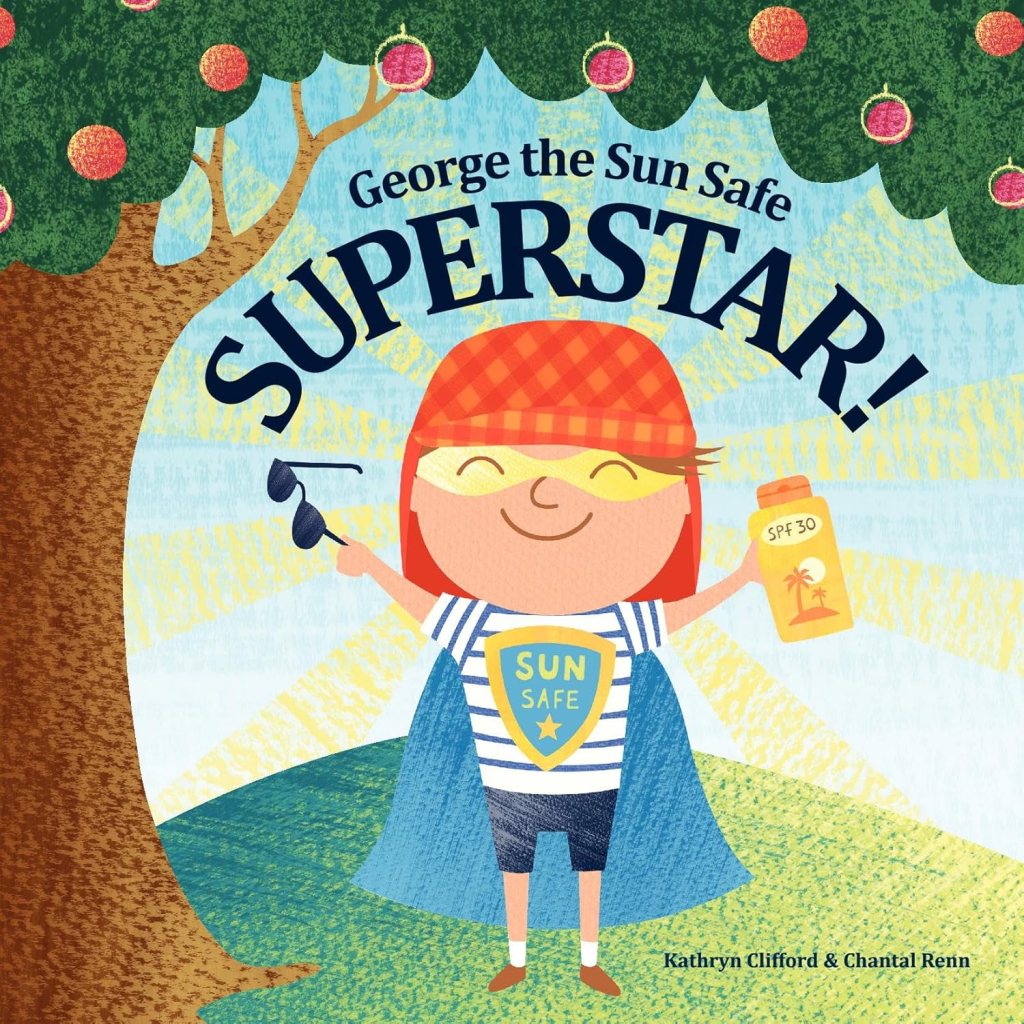
Title:  George the Sun Safe Superstar
Author: Chantal Renn
Illustrator: Kathryn Clifford
Publisher:  FastPrint Publishing
Publication Date: 2012
ISBN: ‎978-1780353173

Helping children learn about the importance of sun safety in a fun and engaging way.

Emergent learning:

We have to be careful with the Sun as it can burn our skin, and it can hurt our eyes if we look at it, but without the Sun we would freeze and have nothing to eat at all.  When the Sun is low in the sky during winter in England we may have some Apples and Pears, but in Taiwan we can harvest apples, strawberries and sugar apples.  When it gets higher in the sky during spring time, in England there is Rhubarb and Strawberries, while in Taiwan there are wax apples, mangoes and loquas.  When the sun is high above us and its hot, in England we get Raspberries and Gooseberries, and in Taiwan there are logan, lychee, pineapple and passionfruit. Later in the year as the Sun begins to become lower in the Autumn, in England we see mostly Apples and Pears, while in Taiwan there are persimmons, pomelos and starfruit. And then it all begins again with Winter, Spring, Summer and Autumn: The seasons of the year.

Activity recommendation:

Visits to supermarkets and growers, and the identification of local produce will support children’s understanding. Also celebrations of harvests, and drawing attention to the economies of seasonal local consumption of food products. Creating a seasonal greengrocer stall for the children’s socio-dramatic play provides the added advantage of supporting emergent literacy with the advertised product names, and emergent numeracy with the prices.

Other Book recommendations:

Where our food comes from

  • Key idea: The food we eat comes from plants and animals. – e.g. Identifying different sources and production methods of food (UC2.4). 
  • Key idea: Different weather conditions can affect people’s daily lives – e.g. identifying the effects of extreme weather on the availability of food items (UC5.3).

Title:  Where Does My Food Come From?
Author: Annabel Karmel
Illustrator: Alex Willmore
Publisher:  ‎ Welbeck Children’s Books
Publication Date: 2022
ISBN: 978-1783128594

This is a fully illustrated non-fiction picture book that shows young children how their favourite foods are grown and made and provides child-friendly recipes for each food.

Emergent learning:

There are two key ideas here: Firstly, the food we eat comes from plants and animals. Second, different weather conditions affect people’s daily lives through the food that we eat. It is important that we involve children in the preparation of food, and that we talk with them about the choices that we make, and about the economic and health reasons for these choices. WE can also talk about where ingredients come from and about transportation costs.  Our recommended story book this week includes child-friendly recipe ideas for different foods and we can encourage the children to prepare some simple dishes on their own which will also support them in learning more about the ingredients and where they come from.

Activity recommendation:

Much can be done on this theme on visits to a supermarket or grocers and taking photos and note of what is displayed at different times of the year.  Large global wall or floor maps can be used to sort picture cards of foods (cut with the children from magazines or advertisements).   In most cultures around the world there are harvest celebrations at different times of the year and local and World news report regularly on thew quality of harvests. If our children are to grow up to value nature, then it is important that we should take advantage of these opportunities to talk to them about the importance and our dependency upon harvests from an early age.

We have also found that food production and cookery activities often offer particular appeal to children who are demonstrating an interest in ‘Rotations’ in their play – they love to stir…

Other Book recommendations:

Weather and Climate

  • Key idea 1: “Weather” describes daily experience, while “climate” describes weather patterns over many years, e.g. Identifying different local seasonal weather conditions, and also the different climates of countries around the world (UC1.1).
  • Key idea 2: Everyone needs sustainable living spaces, e.g. Learning about clever indigenous housing designs from around the world (UC6.4).

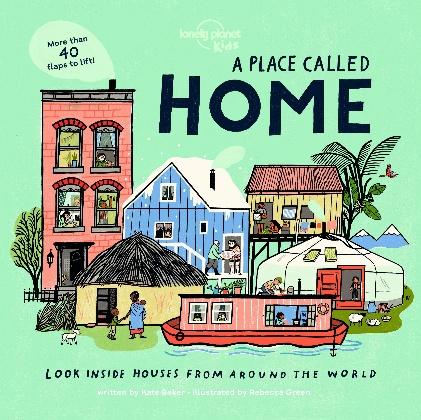
Title:  A Place Called Home: Look Inside Houses Around the World
Author: Kate Baker
Illustrator: Rebecca Green
Publisher: Lonely Planet Kids
Publication Date: 2020
ISBN: 978-1-78868-934-2

This book introduces houses from all over the world, and helps us understand how people live in different places.

Emergent learning:

We cannot teach children the science of Climate Change and Global Warming in the earliest years but if they are to understand it later, they first need to know what CLIMATE is. At first, children learn about WEATHER, and then they learn that Climate means something different to Weather. We can help children learn about weather through daily conversation about the rain, wind and temperature.

It’s only when children have differentiated between different weather conditions, we can talk about weather as a subject. Likewise, when we are ready to talk about “Climate” with children, we need to first give the child a lot of examples of different climates.  When we introduce children to the subject of Climates, we can do this by talking about the way people live in different countries, because the local climate effects what they eat, how they dress, and how they make our homes. We all need nutrition, clothes, and houses and we can show children how clever people around the world create these things in different climate conditions.

Activity recommendation:

We can incorporate climate awareness in their play with small world animals – in many Montessori schools, children are given large continental floor maps to play with – they place the animals on the continents they live in – we can do that with picture cards showing food, clothing and houses as well.

Other Book Recommendations: