- Key idea: Human beings have an innate need to connect with nature – e.g. Promoting a love of nature and regular experience of its positive impact. (UC6.1)
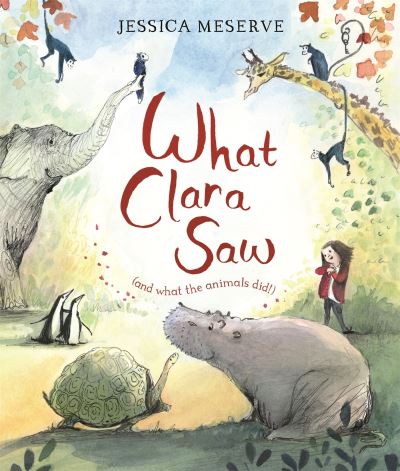
Title: What Clara Saw
Author: Jessica Meserve
Illustrator: Jessica Meserve
Publisher: Macmillan
Publication Date: 2019
ISBN: 978-1509866601
“Can a chimp chat, or a tortoise feel teary? Do animals help each other and do they feel love?”.


Emergent learning:
What is it about nature that is so wonderful?
It is the variety, the diversity, and the ecological wonder of our recognition of natural interdependence . Every plant, animal, fish, bird insect on the planet, humanity included are part of a diverse living community, and we rely on each other and we must learn to respect each other.
In the early years it is the child’s sensory experience of their interactions with the physical environment that dominates their learning. That is why it is important to ensure young children enjoy a wider range of physical stimulation, this is also why it is important to take them out into the natural environment, and why it is important for them to gain experience of different terrains and environments, to play in, and to play with. These include different media such sand and water . Many significant environmental features are so common in the child’s life that they will not be noticed, unless we draw their attention to them. This includes the natural wildlife which needs to be protected. In early childhood education, we often guide children to love animals and cherish life. While most children can understand this idea and express agreement in words, in daily life, when they actually encounter small creatures (e.g. a spider or a caterpillar), they may still act on curiosity or impulse and harm it. While it may often be assumed that it is enough for children to spend lots of time outside enjoying the natural environment, that really isn’t sufficient in itself if we want them to learn to have care and concern for the natural world. There are serious problems in our natural environment, and we should respect our children enough to avoid hiding these problems from them.
Animals are hurt needlessly, and even sometimes killed just for sport. Climate change is another problem that we have all contribute towards, and it will have a significant effect upon our children’s lives. These subjects are constantly addressed in the media and even the youngest children ask us questions about it. We want to prepare our children for the future but many of us worry that talking about our contradictory behaviours, and the environmental dangers, and the fate of endangered species will encouraging despair and anxiety.
The answer to this apparent dilemma is help them feel that they can make a difference and to celebrate our collective human efforts to mitigate the effects of climate change. This is what educators mean when they refer to early childhood education for sustainable citizenship, its all about encouraging children to recognise that they are not victims, they have agency and can make a difference.
For health and safety reasons we draw the child’s attention to the importance of hygiene in the early years, and the dangers of steep drops, deep water, and electricity. Parents and teachers also consider topics such as changes in the weather, and our responses in terms of gaining shelter and protective clothing of value. With the advent of global warming, the child’s future understand of the subject requires that they appreciate the heating effects of the sun, and the effects of obstructions to the sun provided by shade, and the ‘greenhouse’ capture of heat that is felt whenever we find ourselves in sunlight under glass.
Activity recommendation:
Being wary of new a new environmental encounter is a good survival instinct but one way we learn to respect differences is to recognise similarities. Charles Darwin is famous for his 1859 book The Evolution of Species... but he also wrote The Expression of the Emotions in Man and Animals in 1872 and a legacy of that in recent years has been a greater recognition of the embodied nature of many human emotional expressions. We are all animals. Unfortunately children often grow up to disrespect and/or fear many animals. In some cultural contexts children may also grow up to fear even very superficial differences between people, and they may even begin to adopt cultural prejudices. This isn’t sustainable. This is why many preschools around the world ensure that their play resources include small world people and dolls with different skin colours.
We live in a world where historical conflicts and competition have often encouraged the development of fear and prejudices. Yet diversity provides the underlying strength and resilience of every ecological system. This holds throughout nature, and is equally true of every social, cultural, and commercial organisation or nation state. Creativity requires a diversity of ideas and of experience. Prejudices are undermined when we recognise that the diversity to be found within every supposed human group is actually greater than the differences between them. This applies to the nations of the world, as well as to gender and different cultural and ethnic groups. In all of this it is especially important to recognise that skin colouration is a variation that is literally only ‘skin deep’ . Modern science has shown that the outdated ideas of their being separate biological ‘Races’ were simply wrong…
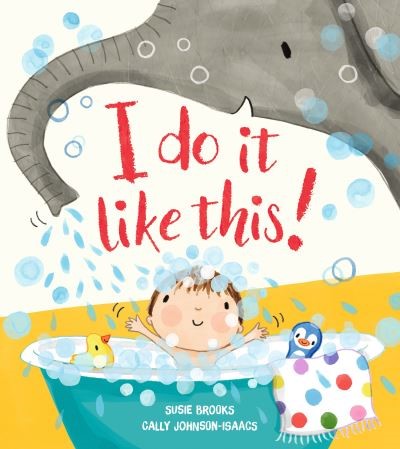
Title: I do it like this!
Author: Susie Brooks
Illustrator: Cally Johnson-Isaacs
Publisher: Kane Miller Books
Publication Date: 2019
ISBN: 978-1610678261
“A fun, interactive book of comparisons”.

Other Book recommendations:
Recommendation reason:



 Involve Me