Energy Consumption and Reduction

  • Key idea: Energy is required in everyday life – e.g. Learning about energy sources and the importance of reducing electricity consumption (UC5.4).
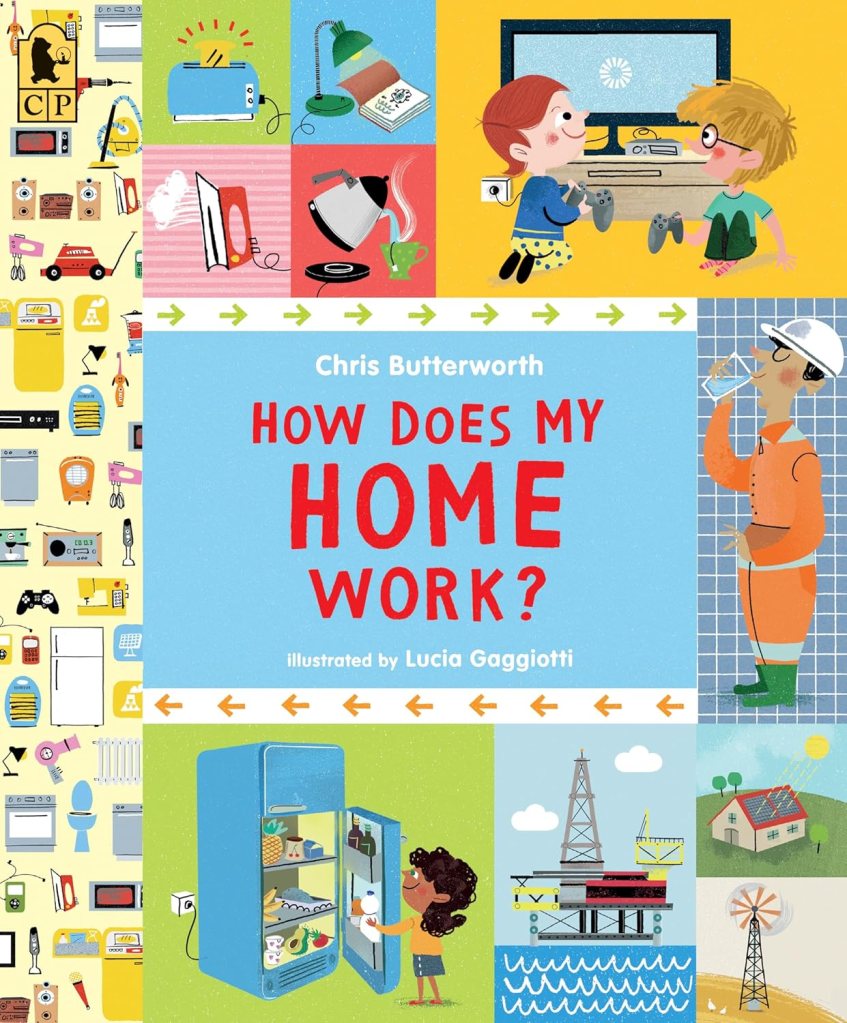
Title:  How Does My Home Work
Author: Chris Butterworth
Illustrator: Lucia Gaggiotti
Publisher:  ‎ Candlewick
Publication Date:  2020
ISBN:‎ 978-1536215946

“Travel beyond the walls and under the floors of a house to find out more about the electricity, water, and natural gas that make your home work”.


Emergent learning:

Energy consumption and reduction is an important educational topic in the early years for both safety and for sustainability reasons.  In the period of a single lifetime, around the world, the use of electricity and electronics has grown from a marginal interest to completely dominate many of our everyday lives.   Yet it is sobering to recognize that about 8% (one in twelve or thirteen) of the worlds population still have no electricity at all in their homes.   Electricity has traditionally been produced from fossil fuels like coal and oil, and it is only recently that we have started to  invest in renewable alternatives.  Electrical energy remains a finite resource, and in the interest of sustainability we mustn’t take it for granted.   It really is shocking that so little attention is still paid to this subject in early childhood and primary education.

The most practical things we should encourage children to be aware of are the dangers: We can tell them that, just like water, electricity isn’t usually dangerous in small quantities. We don’t have to worry about a cup full of water, but we could drown in a bath, swimming pool, the sea or a lake. Electricity is similar, small batteries are usually safe but the electricity supplied by the cables in our household sockets can sometimes kill people.  Rechargeable batteries can start fires and button batteries can be lethal if swallowed.

Burning Coal, Oil and Gas to create Electricity creates pollution, and global warming so it is important to switch lamps and devises off when they are not being used, to remember to close the refrigerator door, wear clothes more than once, and value alternative means of entertainment.  We can also celebrate and encourage the introduction of alternative solar, wind and hydro electric sources with our children.

Activity recommendation:

Many suppliers provide Electrical Usage Monitors (there are large screen versions) and/or you can create a white board or paper chart showing your overall consumption – and you can set targets to reduce it. Always switch things off when they are not in use. Introduce a box of small battery’s in holders with the wires, lamps, buzzers, motors, wheels, and propellers for children to freely play with. The most practical and important thing that we should support children’s awareness of is the dangers of electricity – but just like water, electricity isn’t usually dangerous in small quantities. We don’t have to worry about a cup full of water, but we could drown in a bath, swimming pool, the sea or a lake. Electricity is similar, small batteries are usually safe but the electricity supplied by the cables in our household sockets sometimes kill people.  The exceptions to this may be rechargeable battery’s that can start fires, and button batteries that can be lethal if swallowed.

Electrical safety advice for children:
https://electriciancourses4u.co.uk/useful-resources/childrens-electrical-safety/
https://www.gov.uk/government/news/new-posters-promoting-button-battery-safety

Electronic technology is ubiquitous and even the youngest children can begin learning about electricity:
https://www.ase.org.uk/system/files/Yewman.pdf

Other Book recommendations:

Recommendation reason:
Reducing Waste through Reusing

  • Key idea: There are better ways to deal with things that you no longer need – e.g. Involve the children in Recycling, Upcycling, Reuse, Repair, Giving and Sharing activities.
  • Key idea: Sustainable waste practices aim to keep materials in use for as long as possible – e.g. Teach children to reuse things instead of always trying to buy new items.  Second-hand swop shops for books, coats, boots, toys.  Donating outgrown clothes to others or to charities. (UC6.7)

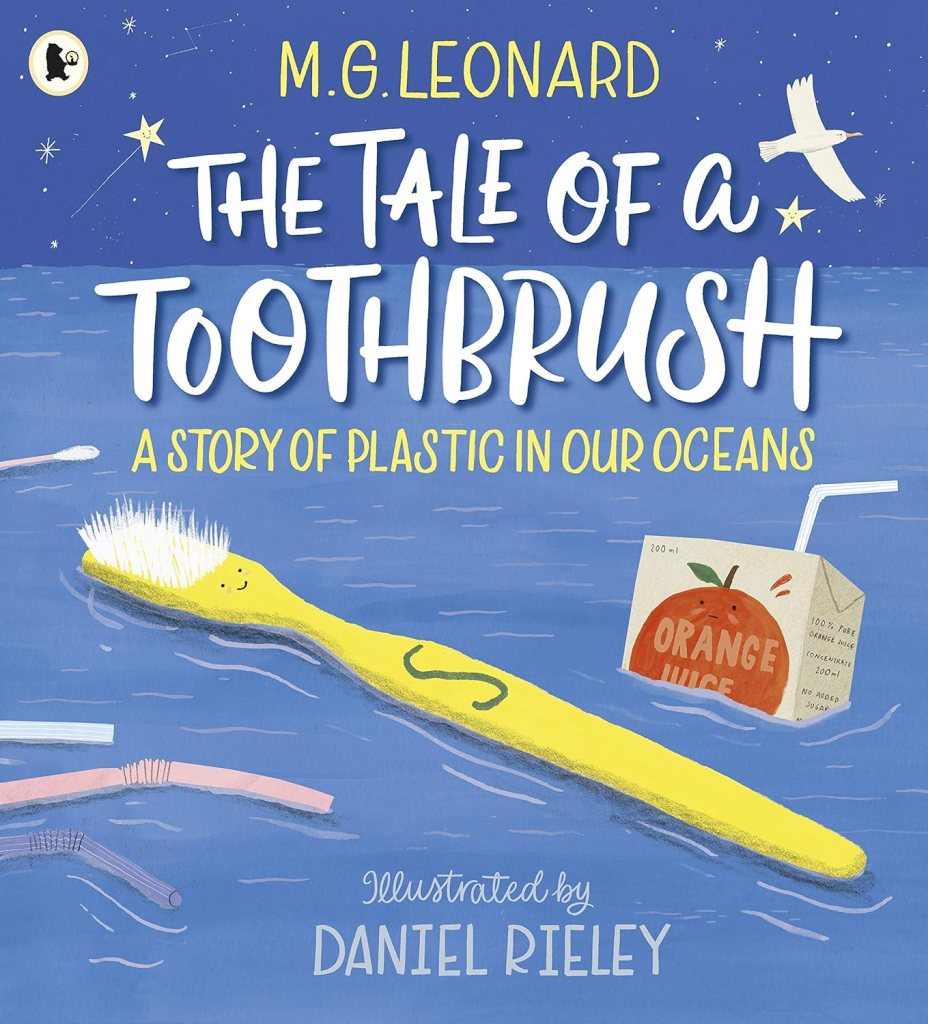
Title: The Tale of a Toothbrush: A Story of Plastic in our Oceans
Author: M. Leonard
Illustrator: Daniel Rieley
Publisher: Walker Books
Publication Date: 2020
ISBN:  978-1406391817

What happens to all our toothbrushes when they’re no longer needed? What can we do about it? What happens to other forms of Plastic Pollution?

Emergent learning:

When an item is ‘Reused’ it often doesn’t change its original form or use – as is the case of items that are upcycled or recycled.  Reuse aims to extend an unwanted products life. Often this entails finding an alternative user for items such as scrap paper, packaging, furniture or clothing. 

Disposal is the opposite of reuse, and children can learn to recognise, and even campaign against the use of disposable products such as gift wrappings, plastic cups and cutlery, paper towels and dishcloths. Many of the alternatives such as Furoshiki Wrapping Cloths, the use of your own chop sticks or multi-use drink containers are recognised as increasingly fashionable, and they make a personal statement of good taste and values.

Activity recommendation:

Children can be involved in reusing kitchen cans and jars for storage, cutting up old fabrics for cleaning, or using coffee grounds as fertilizer. Another valuable activity is to involve them in surveying your waste. Randomly emptying and sorting out the contents of your waste bin to see what might be reduced, reused, and recycled.   An old toothbrush might, in the process, find a new life as a dolls hairbrush, for shoe cleaning or even as a paint brush.

Other Book recommendations: 

Recommendation reason:
Reducing Waste through Recycling and Upcycling

  • Key idea: There are better ways to deal with things that you no longer need – e.g. Involve the children in Recycling, Upcycling,  Reuse, Repair,Ggiving, and Sharing activities. (UC5.2)
  • Key idea: Taking climate action is urgent – e.g. Invite community leaders into the preschool to explain their climate actions. Create real or pretend sustainable bazaars, action plans, silent marches, etc

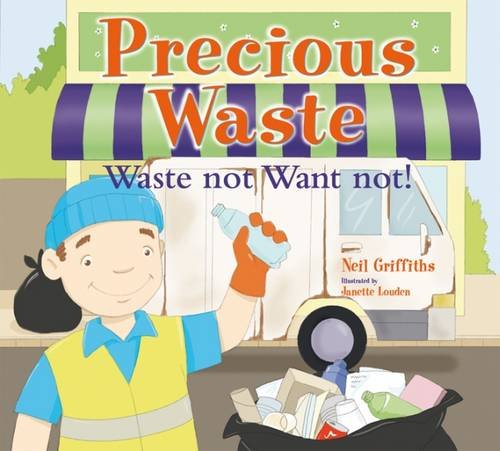
Title:  Precious Waste
Author: Neil Griffiths
Illustrator: Annette Louden
Publisher:  ‎ Red Robin Books
Publication Date: 2016
ISBN: ‎ 978-1904949152

“Refuse collector Ryan goes on a mission to change the mindset of the locals about recycling their rubbish and waste”.

Emergent learning:

Recycling is all about conserving the materials something is made from, so that it can be used to make something new.

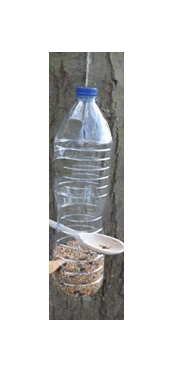
Upcycling is completely different from recycling. It is all about taking an item that would otherwise be waste and improving it in some way to make it useful again.  A plastic bottle, for example, can be transformed into a face visor for a space suit, a plant pot, a watering can, or a bird feeder.  Upcycling is highly creative, and the only limits are our imagination and our skills.  

Recycling activities encourage economy and as they involve the children in sorting, this helps them develop their early number skills. They also learn about materials which is valuable in terms of early learning in science and design and technology.

Activity recommendation:

Upcyling activities support and encourage children’s creativity. A simple bird feeder may be improvised using a plastic bottle cut with feed holes and sticks positioned to provide a perch. Having introduced the basic idea children can be encouraged to observe their feeder in action and develop modifications for improvement. The choice of food itself is also a ‘food design and technology’ activity, and

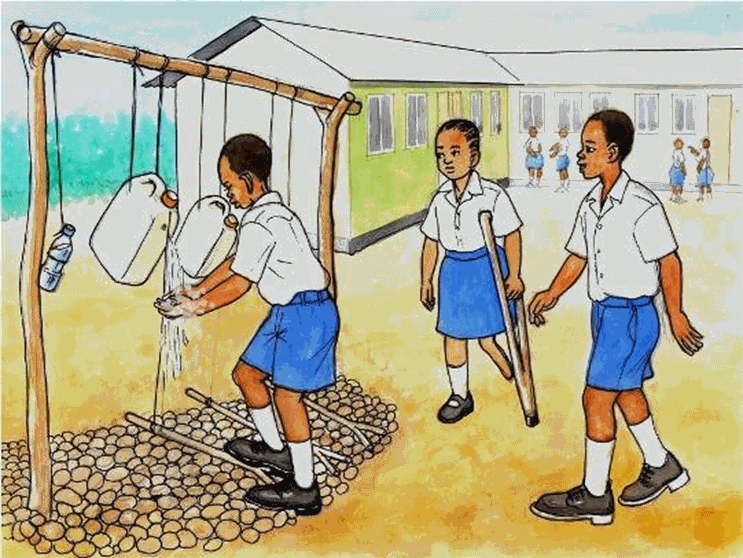
We often use Upcyling examples from the preschools of poor countries because they provide powerful illustrations of clever and creative innovations that children can learn to respect and admire.  One popular example is the “Tippy Tap” often found in rural preschools in Africa where there is no piped running water for toilets and sanitation.  To make your own, all you need is a plastic (e.g. milk/squash) bottle that you suspend with string from its handle, another string is tied between a stick on the ground and the spout so that when you put your foot on the ‘pedal’ it pours the water.  You will see a picture on our web page and you will find it’s a good way of conserving water and providing hygiene in your garden and other outside play areas.

Other Book recommendations: