- Key idea: Climate effects different groups in different ways – e.g. encouraging support and empathy for different groups such as the elderly, those in more vulnerable environments locally and abroad.
- Key idea: Who we are, and the circumstances that we live in, can create more negative experiences – e.g. encouraging support and empathy for groups and individuals treated unfairly.
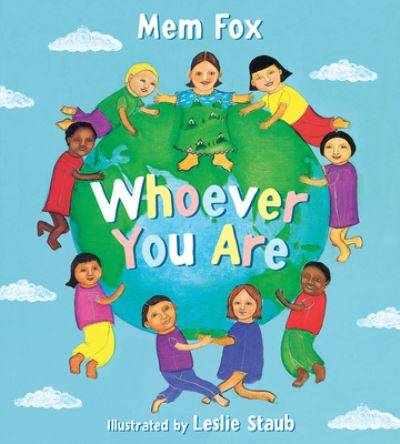
Title: Whoever You Are
Author: Mem Fox
Illustrator: Leslie Staub
Publisher: :Houghton Mifflin
Publication Date: 2017
ISBN: 978-1328895813
“Although children around the world may look different, speak different languages, and live in different places, their hearts are the same. They all laugh, cry, and feel love just like us”.


Emergent learning:
In the context of education for sustainability the first key idea here is that Climate effects different groups in different ways. Who we are, and the circumstances that we live in, can create especially negative experiences. Human interdependence is an ecological fact of nature, we all depend upon each other, we depend on our family, neighbours, and climate change has shown us now better than ever before how we all depend on everyone else around the world. Yet competitive national, cultural and ethnic divisions often get in the way of us co-operating and collaborating properly to achieve peace and prosperity for everyone.
But scientific evidence has repeatedly shown that there is more diversity within human populations and groups than there is between these groups. Humanity isn’t divided into distinct biological ‘races’, and even gender might be considered more of a continuous, rather than a categorical variable. The physical differences between us provide complementary talents and capabilities.
The latest research demonstrates the rich neurodiversity that we all share. We may all be unique individuals and different, but in other respects we are all the same and we are equal. It is social and cultural prejudices and fear that create barriers to our natural instincts to provide cooperation and mutual support, and for the sake of Peace and Sustainability education these false narratives must be countered from an early age.
Activity recommendation:
Being able to care for others and offer comfort, empathy is an important ability that children can begin to develop in their early years. Some excellent guidance is available to educators and parents:
https://birthto5matters.org.uk/inclusive-practice-and-equalities/
https://www.naeyc.org/resources/pubs/yc/nov2019/understanding-anti-bias
See also:
Siraj-Blatchford, J. (2018) Peace Education and Sustainability, Montessori International, Spring
Siraj-Blatchford, J (2008) The implications of early understandings of inequality, science and technology for the development of sustainable societies in Samuelsson, I and Kaga, Y (Eds), The Contribution of Early Childhood Education to a Sustainable Society. Paris: UNESCO
Other Book Recommendations:

 Involve Me